





Here's a thought I can't shake: the knowledge work era is ending.
I don't mean knowledge work is disappearing. I mean the economics of it are shifting. And I think we need a new name for what's coming.
I've been thinking of it as the Guidance Economy.
Let me explain.
In knowledge work, economic value came from the artifacts we created—the reports, the code, the designs, the analyses. We got paid for producing artifacts with our minds.
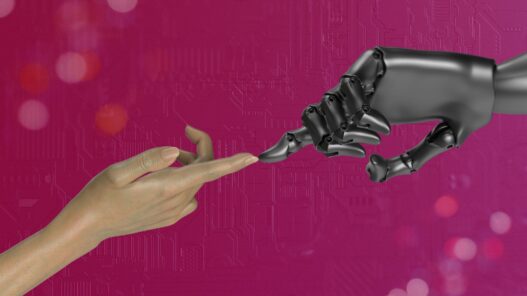
But AI agents are starting to produce those artifacts too. And they're getting better, fast.
This morning, I watched an AI agent, Claude Cowork (more on this in the coming weeks), reorganize my entire smart home system—clicking through menus, renaming devices, fixing configurations. It took it half an hour. It would have taken me an afternoon (if I could have justified doing the task at all).
So if agents can create the artifacts, what do we contribute?
Guidance.
———
In the Guidance Economy, economic value comes from what our agents are able to create—and from the quality of direction we give them.
Before, with knowledge work, we managed three ingredients: time, attention, and energy. I've written entire books about these ingredients. But with guidance work, these still matter and we're also managing something new: the capabilities of our machines.
Not just resource constraints like processing power (though those matter). But we also must know what features they have, what they're able to do, what we can and can't effectively guide them on. It's a complicated idea, but the point is simple: know what your tools can do.
Good guidance requires:
- Intention: The ultimate ingredient, setting clear direction for your systems
- Strategy: Knowing what's worth doing at all, which often looks like subject matter expertise
- System knowledge: Understanding what agents can and can't do
- Taste: The judgment to evaluate whether what they produced is actually good
You're not just creating intentions for yourself anymore. You're creating intentions for your machines.
Becoming more intentional has always been central to becoming more productive. But it's going to get even more important. (This is why I wrote a whole book on the idea!)
———
There's an unfortunately disruptive economic reality here that we will need to face. It's becoming economically unviable to pay humans for work that AI can do equally well.
One unit of agentic knowledge work time costs less than one unit of human knowledge work time. This gap is widening.
This isn't a prediction about the distant future. It's starting now. My entire morning today was guidance work—chatting with an AI assistant to plan out my future article ideas, directing an agent to reprogram my home automation, even dictating emails through AI-powered transcription that cleans up my speech in real-time. (I highly recommend Wispr Flow!)
So where does this leave us?
The primary way humans will contribute economic value is by guiding machines. Writing instructions that understand machine limitations while clearly articulating what you want. This is a skill, and it can be developed. It's the core of the Guidance Economy.
But there will be another economy alongside it. Call it the human economy. It fills the spaces that machines can't reach:
- Roles of connection: Speaking with other humans, collaborating, strategizing together. Wherever the work touches people, humans need to optimize those touchpoints.
- Analog world work: Physical tasks that robots can't yet do. It's going to be a long time before a robot can fix the plumbing under your sink.
- Taste and judgment: Evaluating outputs for quality, importance, impact. AI can generate; humans still need to curate.
The shape of human economic contribution is changing. It's getting smaller in some dimensions. Through this change, the guidance layer—the intention-setting, the directing, the judging—becomes essential.
———
The bottom line: Intention is about to become everything.
In Intentional, I wrote that the key to finishing what you start is becoming more intentional.
When AI handles more and more of the doing, the ability to set clear, meaningful intentions isn't just a nice-to-have skill. It's becoming the foundational capability for working in an AI-augmented world.
So if you take one thing from this: start practicing.
Tomorrow morning, look at your task list and ask: which of these can I delegate to an agent?
- ChatGPT combining two spreadsheets?
- Claude Cowork doing manual data entry?
- An AI coding a script to automate something tedious?
Start there. The Guidance Economy is coming.
In the meantime, I'm going to keep experimenting with as much AI stuff as I can on your behalf.
I can't wait to share what I learn with you.