



I used to be that person who left Canada with nothing but fridge magnets and mild regret.
Canada has this way of surprising you with its food. One minute you're wandering through the cobblestone streets of Quebec City, the next you're warming up in a small shop near Banff National Park, debating whether maple-flavoured everything is genuinely brilliant or just very good marketing. I've brought home treats that were incredible… and a few that melted in my bag somewhere between the Rockies and home. Trial and error, honestly.
That's why I'm picky now. If I'm making space in my luggage, it has to be worth it — something that instantly brings me back to the trip the moment I open it. If you love travelling for flavours like I do, you'll probably enjoy my guide to Best Foods Around the World too — because sometimes the best memories come from what you taste.
And quick practical note — if you're continuing your trip to the US after Canada, set up your eSIM for the USA before you cross the border. I've done the whole “searching for WiFi at the airport” thing before and it's not cute. Being connected immediately just makes everything smoother.
Alright, let's get into the best food souvenir from Canada that are actually worth bringing home.
What To Buy Across Canada
Moraine Lake
One thing I've learned from travelling around Canada is that chocolate isn't just chocolate here — it actually reflects where you are. I used to assume it would all taste the same, just packaged differently for tourists. I was wrong.
Once you start paying attention, you'll notice each region leans into its own flavours, and that's what makes it such a good food souvenir.
Here's what I've personally noticed (and tasted) across different parts of the country.
West Coast Canada
On the West Coast — especially around British Columbia — I kept seeing rich, high-percentage dark chocolate paired with local ingredients like wild blueberries, cranberries, and even sea salt from the Pacific.
The flavour profiles here tend to be less sugary and more intense. Think deep cocoa notes balanced with tart berries or that subtle salty finish that makes you keep reaching for “just one more square.” I once brought home a bar dotted with dried local berries, and it survived the flight beautifully (dark chocolate travels better, by the way — learned that after a milk chocolate disaster).
If you prefer sophisticated, not-too-sweet flavours, West Coast chocolate is usually a safe bet.
Quebec City & Eastern Canada
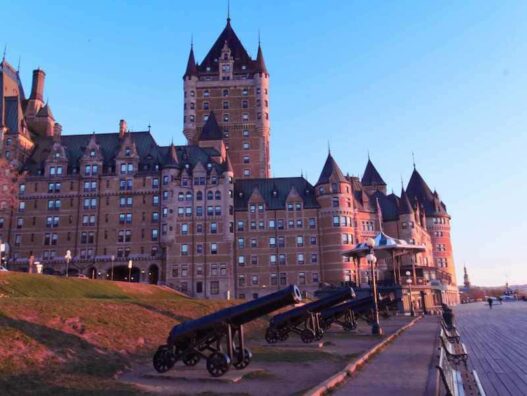
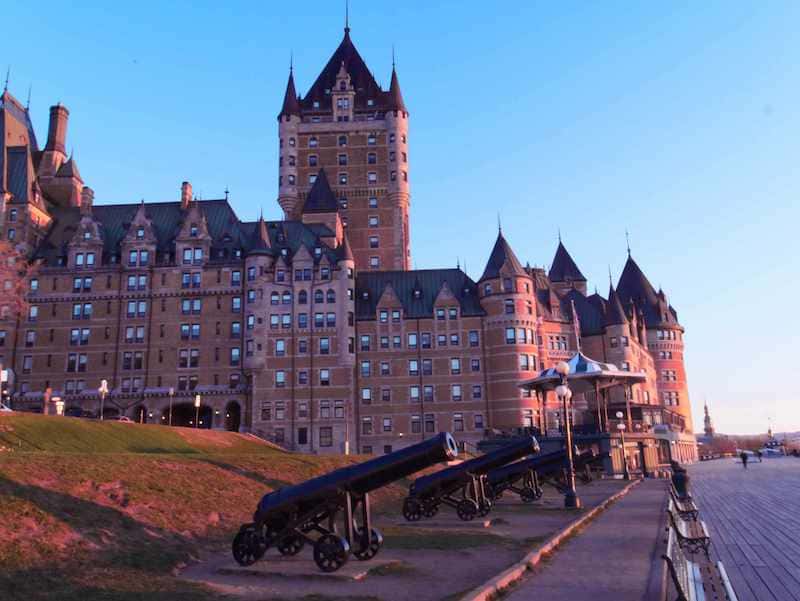
Chateau Frontenac in Quebec City
When I was in Quebec City, I noticed something different straight away — a stronger European influence in both presentation and flavour. You'll find beautifully crafted chocolates infused with coffee, creamy ganache centres, and of course, maple in all forms.
Maple cream-filled chocolates are everywhere for a reason. Canada produces around 70% of the world's maple syrup, so this isn't just a gimmick flavour — it's part of the country's identity. That said, not all maple chocolates are equal. Some taste artificially sweet, while others use high-quality syrup that gives a deep, almost caramelised flavour. I always check the ingredients list now to make sure real maple syrup is actually listed.
In cities like Toronto, you'll also spot coffee-infused chocolates — perfect if you want something slightly less sweet and more grown-up.
The Canadian Prairies
The Prairie provinces surprised me the most. Instead of flashy flavours, the focus tends to be on simple, locally sourced ingredients — like honey, nuts, and fruit fillings.
Chocolates filled with prairie honey have this natural floral sweetness that feels different from standard sugar-heavy fillings. It's subtle, not overpowering. I once picked up a small box thinking it would be “nice enough,” and it ended up being one of my favourite edible souvenirs from the entire trip.
These types of chocolates feel more rustic and authentic — less touristy, more local.
Look For Top Canadian Chocolate Brands
Every city or country has iconic brands connected to chocolates and other treats, and Canada is no different.
Ask locals when you're visiting to find out which labels emerge above the pack in a given city or region. When you're searching for the perfect chocolates to bring home, you can't go wrong with established brands like Purdy's.
Whether you're looking for turtles chocolate boxes or creamy caramel-filled bites, you'll find these flavors with Purdy's. Established in 1907, this iconic chocolatier crafts gourmet chocolates that will delight with their silky textures and rich flavor mixes, including praline and nougat.
Choose Travel-Ready Chocolates
Welcome chocolates!
It's easy to get carried away buying beautiful chocolates while wandering through places like Quebec City, Vancouver, or Toronto — I've done it more than once. But before you head to the checkout, pause and think about one very unglamorous detail: how are these actually getting home?
If you're flying back to a warm country, especially somewhere humid in Southeast Asia or Australia — temperature changes matter. Canada might be cool and crisp when you're shopping, but your layover airport or taxi ride home probably won't be. Chocolate starts softening faster than most people realise, and what looks perfectly structured in Montreal can turn into a slightly misshapen block by the time you unpack.
You don't need to overcomplicate it, but a little planning goes a long way.
First, be realistic about what travels well.
Those delicate truffle-style chocolates with ultra-soft centres that looked amazing in a boutique in Quebec? They're the most vulnerable. Anything with liquid caramel, maple cream, or alcohol fillings is more likely to lose its shape during long-haul travel. Even if they don't fully melt, the texture can shift once softened and re-set, especially on flights over 8–12 hours.
If you're travelling from cities like Vancouver on the West Coast or Toronto in summer, where temperatures can already be mild to warm, dark chocolate is generally the safer choice. It has a higher cocoa content and holds up better than milk or white chocolate. White and milk varieties are creamier — which also means they soften faster.
That said, if you've found a locally crafted milk chocolate bar you genuinely love, don't skip it — just pack smarter. Some artisan shops will offer insulated packaging if you ask. If not, create your own buffer inside your suitcase.
Avoid packing chocolates next to electronics like laptops, power banks, or cameras. Those generate heat, especially during long travel days. Instead, place chocolate boxes in the centre of your luggage, surrounded by sweaters, scarves, or thick clothing.
It's a small detail, but it makes a difference.
There's nothing worse than opening your suitcase at home, excited to relive your trip to Quebec City or Vancouver, only to find your “perfect souvenir” didn't survive the journey.
If you're road-tripping through Canada, whether it's across the Rockies or between cities like Toronto and Montreal — packing is even easier. Keep chocolates in a small cooler bag in the car, away from direct sunlight, and bring them inside overnight instead of leaving them in the boot. Long scenic drives are part of the magic, but parked cars heat up fast, even in mild weather.
And honestly, food isn't the only thing worth bringing home. I always keep a few Canadian coins or small notes in foreign currency — they make surprisingly good souvenirs.
One more thing that's changed how I travel: digital tools. Having an eSIM set up for international trips (especially if you're combining Canada with the US) makes the whole experience smoother.
At the end of the day, the best food souvenir to bring home from Canada isn't the fanciest or most expensive. It's the one that feels tied to a moment — something you chose intentionally, packed carefully, and can enjoy long after the trip ends.