






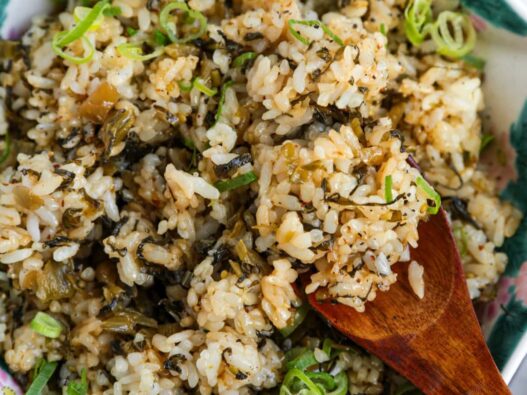
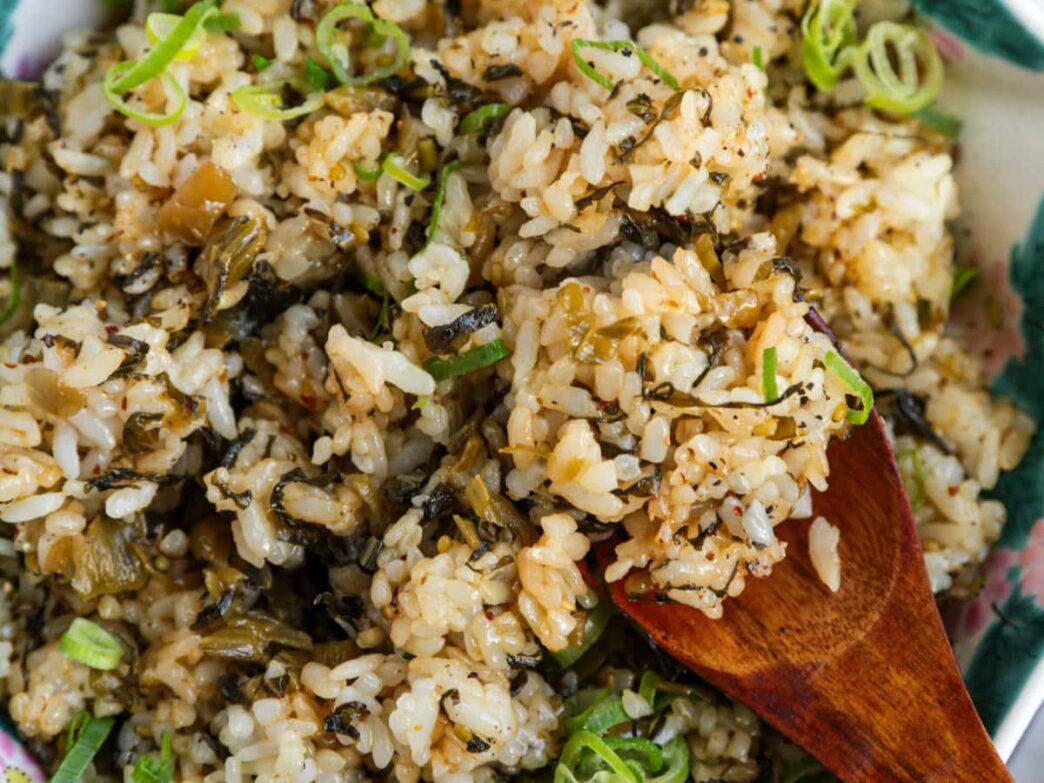
Takana chahan is one of those recipes that proves how much flavor just a few ingredients can deliver. This Japanese fried rice is made with chopped pickled mustard greens, day-old rice, and a handful of pantry staples. It's savory, slightly tangy and just a little spicy when made with the karashi version of takana.
This recipe has roots in Kyushu, the southern island of Japan where my mom is from. Takana is a staple ingredient there, often served alongside ramen, tucked inside onigiri, or stirred into fried rice like this. Growing up, this was one of those quick meals that appeared on our table whenever there was leftover rice in the fridge.
A quick meal that tastes like you tried much harder. What I love about takana chahan is how fast it comes together. The pickled greens bring so much flavor that you barely need any additional seasoning. In less than ten minutes, you've got a bowl of fried rice that's savory, aromatic and incredibly satisfying.
What is Takana Chahan?
Takana chahan (高菜チャーハン) is Japanese fried rice made with takana, a type of pickled mustard green that's increasingly popular the further south you go in Japan. Takana has a bright, salty flavor with a slight tang from the pickling process. Some varieties also have a gentle heat (piripiri or pirikara) that adds a little kick to the dish. When stir-fried with rice, the greens infuse every bite with their savory flavor. While eggs are often added to Japanese fried rice, takana chahan is sometimes made without them, allowing the flavor of the pickled greens to take center stage.
Takana greens are usually salted and then fermented, which imparts a deeply tangy flavor that's almost fizzy. Depending on the brand, takana can range from mild and salty to mildly spicy. It can be eaten on it's own with a bowl of steamed Japanese rice – or incorporated into cooked dishes. You'll usually find takana sold in small vacuum-sealed packages at Japanese grocery stores.
Ingredients for Takana Chahan
Pickled takana (mustard greens). The star of the dish. Finely chopping the greens helps distribute their flavor evenly throughout the fried rice.
Sesame oil. I use this to stir fry the takana quickly before assembling the fried rice. Toasted sesame oil adds a nutty aroma that pairs well with the pickled greens.
Neutral oil. Used for stir-frying the rice at high heat. I use vegetable oil or grapeseed oil for their naturally low smoke points.
Cooked Japanese rice. Leftover rice works best for fried rice because the grains are firmer, drier and separate easily when stir-fried.
Soy sauce. Just a small amount of shoyu enhances the savory flavor without overpowering the dish with too much salt.
Green onions. Fresh and slightly sharp, they brighten up the finished fried rice.
Black pepper. A little pepper adds warmth and balances to the dish.
Ingredient Variations
- Ground white pepper or ichimi (Japanese ground red pepper) instead of the black pepper. White pepper is hot, musky and sharp. Ichimi is bright, smoky and mildly fruity.
- Jasmine rice instead of Japanese rice. While I prefer the close, firm texture of Japanese rice, Jasmine rice is a solid option too.
- Gluten-free: swap the regular soy sauce out and use liquid aminos or tamari instead.
How To Make Takana Chahan
- Prepare the takana. Finely chop the pickled greens and stir fry quickly in sesame oil – then set aside.
- Stir fry the rice until the grains are separated and hot throughout. Then stir in the takana and soy sauce and mix well.
- Serve hot, topped with chopped green onions and ground black pepper.
Cooking Tips
Use day old rice. Freshly cooked rice has too much moisture and can be too soft and sticky. Rice that's been refrigerated overnight fries much better.
Use higher heat to stir fry the rice. A hot wok or skillet helps the rice fry. A cooler pan will essentially steam the rice.
Break up the rice before cooking. If the rice is clumped together, gently break it apart with your hands before adding it to the pan.
Use medium heat when stir frying the takana in sesame oil. This is for two reasons. First, the pickled takana tends to pop and jump around in a screaming hot pan and can get messy. Second, sesame oil has a fairly low smoke point and tastes bitter when burned.
Optional Additions
This version keeps things simple and is closest to the version I grew up eating, but there are plenty of ways to customize takana chahan.
- Scrambled egg
Many versions include egg. Simply scramble it in the pan and fold it into the rice once set. - Fried egg
When my husband makes this, he prepares the fried rice exactly as written but tops it with a fried egg with a runny yolk. - Garlic or chili oil
A clove of minced garlic stir-fried with the rice adds extra aroma. Crispy chili oil delivers moderate spice and the flavor of fried shallots. - Make takana omurice
Omurice is fried rice topped with a omelette and ketchup. It's a very popular dishes served in Japanese homes and family style restaurants and cafes.
What to Serve With Takana Chahan
At home, I like to serve takana chahan the way you might find it alongside small plates at an izakaya. It makes a great centerpiece for a casual meal, especially when paired with a few simple Japanese sides such as this edamame dish, and a cold glass of lemon sour.
A crisp sesame cucumber salad adds a refreshing crunch that balances the savory fried rice perfectly. A bowl of miso soup is always a comforting addition, and it turns the meal into something that feels a little more complete.
Did you try this recipe? Are there changes you made that you would like to share? Share your tips and recommendations in the comments section below!
Print
Takana Chahan (Mustard Green Fried Rice)
Japanese fried rice with tangy, savory pickled mustard greens. Takana chahan is classic Kyushu comfort food that proves you can enjoy big flavors with just a few ingredients.
- Prep Time: 5 minutes
- Cook Time: 6 minutes
- Total Time: 11 minutes
- Yield: 4 sides 1x
- Category: Rice
- Method: Pan frying
- Cuisine: Japanese
- Diet: Vegan
- Slice the takana. If the takana you have is in large chunks or in full leaves, finely chop it.
- Fry the takana. Add the toasted sesame oil to a wok or deep skillet over medium heat. When the oil is hot, swirl it around to evenly coat the surface of the wok and add the takana. Stir fry for 2 minutes. Turn the heat off and transfer the takana to a plate. Set aside.
- Cook the rice. Using the same wok or deep skillet, add the vegetable oil and turn the heat to medium high. Swirl the oil to coat the surface of the wok and add the rice. Stir fry for 2-3 minutes, until the rice has separated and is soft.
- Add the seasoning. Add the takana and soy sauce. Stir fry to combine all of the ingredients well.
- Serve. Turn the heat off and transfer the fried rice to a serving bowl or plate. Season with a little ground black pepper, top with chopped green onions and serve hot.
Nutrition
- Serving Size: 1 serving
- Calories: 250
- Sugar: 0.5g
- Sodium: 77mg
- Fat: 7.2g
- Saturated Fat: 3.3g
- Unsaturated Fat: 1.6g
- Trans Fat: 0g
- Carbohydrates: 41g
- Fiber: 0.7g
- Protein: 4.2g
- Cholesterol: 0mg
Frequently Asked Questions
Yes, but the rice should be cooled first so the grains firm up. Spread freshly cooked rice on a sheet pan and put it in the fridge, uncovered, for an hour so it dries out a bit.
Some varieties are mild to medium spicy while others are not. Check the package labeling if you prefer a milder flavor. That said, even the spicy versions aren't going to blow your hair back.
This recipe is already vegetarian. In fact, it's vegan.
Takana is usually available at Japanese grocery stores and some Asian markets.