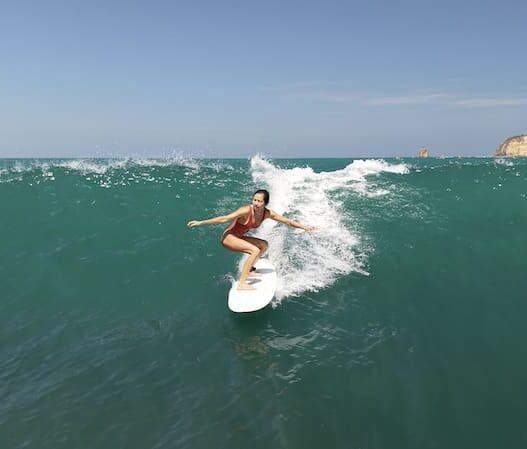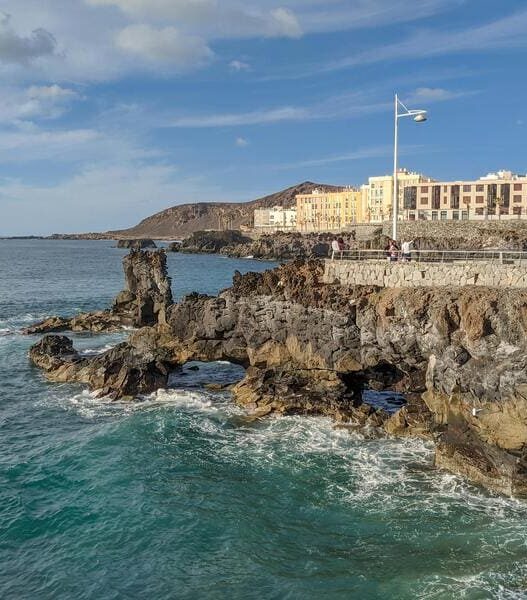




Still off most people's radar, despite being barely 4 hours from London. That tells you something.
The Azores are 9 Portuguese volcanic islands dropped into the mid-Atlantic – closer to North America than to mainland Europe, and genuinely unlike anywhere else you'll travel on from tos side of the world.
Mass tourism hasn't caught up yet. Hopefully, it stays that way for a while.
What's here: crater lakes that glow green and blue depending on the light, pools heated from below by volcanic activity, a local stew that gets cooked underground by geothermal steam, and hiking that will properly sort your legs out. Rain comes and goes.
The whole place is intensely green because of it. Compared to most of Western Europe, prices are still sane. If you're after Algarve sun, but the crowds don't exist here, a slower, more local side of Faro reveals itself.
Proper adventure, food worth travelling for, and places run directly to surprise you. That's what the Azores deliver. Here's how to approach your first visit.
Which Islands To Visit First
9 islands are a lot. Try to see all of them, and you'll spend the whole trip on planes and ferries, rushing through places that deserve more. For a first visit, please pick 1 to 3 islands and plan accordingly.
São Miguel is where almost everyone lands, and it's the right call. Largest island, best flight connections, most tourist infrastructure, and genuinely enough going on to fill a week without a dull moment. It offers a diverse island experience comparable to other popular European destinations, including Greece.
Crater lakes, a geothermal village, whale watching, black sand beaches, and Europe's only working tea plantations. It's essentially a taster menu for the whole archipelago.
Pico is for the people who actually want to earn their views. Portugal's highest peak – 2,351 metres of volcanic rock – sits right in the middle of it, and the coastline below is one of the most unusual landscapes you'll encounter anywhere: a UNESCO-listed patchwork of centuries-old basalt vineyard walls running right to the water's edge.
Terceira doesn't get the attention it deserves. Angra do Heroísmo – the capital – has been a UNESCO World Heritage Site since 1983. Renaissance streets, old harbour fortifications, and brightly painted chapels on every corner. It was built during the Age of Exploration, when ships crossing between Europe and the Americas had no choice but to stop here.
10 to 14 days? Go São Miguel and Terceira, or São Miguel plus the Triangle – Pico, Faial, São Jorge – all short ferry hops from each other and easy to string together. Either way, commit to one direction rather than trying to squeeze in both. Rushing here is genuinely a waste.
When To Go – The Honest Version
The Azores aren't somewhere you go expecting wall-to-wall sunshine. They're mid-Atlantic volcanic islands, and the weather behaves accordingly. Locals have a saying – 4 seasons in 1 day – and it's not a quirky exaggeration. Bright sunshine, horizontal rain, mist, back to sunshine. Sometimes within an hour. Atlantic systems come in fast with very little warning.
Best Time to Visit the Azores for Good Weather (June – August)
June through August is the settled window. 20th most days, hydrangeas everywhere along the roadsides, and the longest runs of decent weather. Everyone else has the same idea, which drives up prices and means things like car hire and hiking permits need to be booked weeks in advance rather than days.
Why Shoulder Season Is the Best Time to Visit the Azores (April – June, September – October)
Shoulder season – April to June, September through October – is genuinely the smarter choice for most people—fewer tourists, lower costs, and experiences that are just as good. Whale migration runs from April to May. September is warm in the sea and coincides with the harvest on Pico.
Is Winter a Good Time to Visit the Azores?
Even winter trips work if you're mainly there for thermal pools and walking – cold air makes hot water feel better, and the resident sperm whales don't go anywhere.
What To Pack For the Azores + Useful Travel Tips
Whatever month you're going, layers are non-negotiable. A decent waterproof too. The Spotazores app has live webcams across the islands – download it before you leave and save yourself a long drive to a viewpoint that's sitting in thick fog.
Getting There And Getting Around
From the UK, Heathrow to Ponta Delgada runs directly mainly through spring and summer with British Airways.
TAP goes via Lisbon year-round from several UK airports.
Azores Airlines – SATA International – connects from a handful of European cities. Return fares in the off-season can be quite reasonable; summer prices move fast, so earlier is better.
Island hopping means SATA Air Açores for flights – roughly GBP70–110/ USD89-140 one way, monopoly carrier, worth booking ahead because weather cancellations happen and availability tightens in summer.
The Triangle islands have good ferry coverage through Atlânticoline; Faial to Pico is a 20-minute crossing and runs year-round. Elsewhere, the ferries are mostly summer-only.
Travelling around Europe with a coach
On each island, a car is non-negotiable. Buses run between towns for locals commuting to work – they're not designed around tourist itineraries and won't get you near a crater lake or a fumarole.
Automatic transmission in summer: book it as soon as you confirm your dates. Supply is small, it goes fast, and the mountain roads make manual driving genuinely unpleasant if you're not used to it.
Before you head off, read this guide to planning a Europe road trip: all about tolls and vignettes – the rules differ by country and catch plenty of drivers out.) You can't take rentals between islands, so budget a separate hire for each one.
São Miguel: Start Here
Sete Cidades
2 crater lakes inside a vast volcanic caldera, sitting right next to each other – 1 appearing blue, one green, the difference coming down to depth, light, and algae content. There's a local legend about star-crossed lovers with differently coloured tears, which is a better story than algae content, admit it.
Miradouro da Boca do Inferno is the classic viewpoint. Short flat walk from the Lagoa do Canário car park, and on a clear day, it genuinely does what the photos promise. Trail PR04 SMI is the one if you want more than a lookout – 11.8 kilometres tracing the caldera rim with the lakes below you for most of it. Three hours, properly worth it.
One thing before you drive out there: check the Spotazores webcam. That caldera clouds over completely and regularly. Thick fog where the lakes should be is a specific kind of disappointment when you've just done 40 minutes in the car.
Furnas – Where The Earth Does The Cooking
Head 45 minutes east of Ponta Delgada and you end up in Furnas, sitting in its own volcanic caldera. Mud pools boil quietly by the roadside. Steam vents hiss from cracks in the ground. There's a low background smell of sulphur everywhere. You get used to it faster than you'd expect.
Terra Nostra Park is what most people come for – a botanical garden that's been growing since 1775, wrapped around a large thermal pool sitting at 38–42°C. Orange-brown water from the iron minerals. Absolutely will ruin light swimwear, so wear something dark. Entry around GBP17/USD22. Evenings, Poça da Dona Beija is the better call – several natural pools open until 11 pm, surrounded by trees, and nowhere near as busy as the daytime Terra Nostra crowds.
A long day on São Miguel's trails followed by an hour in that water while the evening cools down – it sorts you out in a way that's hard to articulate. You just feel it.
Some hikers doing multi-day trips through the island keep live rosin gummies for these recovery evenings specifically – something to genuinely wind down with before the thermal pool soak. However you approach it, block out at least half a day in Furnas for doing nothing useful. Your body will push back if you don't.
Cozido Das Furnas
You're in Furnas. The cozido is happening.
Beef, pork, chicken, chorizo, blood sausage, potatoes, cabbage, carrots, taro – sealed into a pot and carried down to the steam vents near Furnas Lake before sunrise.
Left there to slow-cook in the volcanic heat for 6 hours or so. No water added. The steam does all the work, drawing the natural juices out of everything. Around midday, the pots come back up. You eat.
Restaurante Tony's is the go-to. Book a day or 2 in advance and arrive properly hungry – portions run large. Around GBP15–25/ USD19-32 per person.
Trying to explain what it tastes like to someone who hasn't had it doesn't really land. You just have to go.
Pico: The Serious Island
Climbing Mount Pico
Pico Duarte
This is the hike that defines the trip if you do it. 2,351 metres, 1,150 metres of elevation gain in roughly 3.8 kilometres each way – 6 to 9 hours return depending on your fitness and the conditions.
Not technical climbing. Properly demanding hiking over steep, loose volcanic rock. The weather turns fast at altitude, and a meaningful percentage of people who set off don't reach the top.
Mandatory permit required – around €25 per person, booked online through the official Azores government portal, GPS tracker included. Daily cap of 320 hikers. A guide isn't required, but it makes real sense if the weather looks uncertain.
At the very summit sits Piquinho, a small volcanic cone that's the true high point – a scramble up it is limited to 30 people at a time. Views across to São Jorge, Faial, beyond. Worth every step of the climb to get there.
July and August are the most reliable months. June and September work too.
The UNESCO Vineyards
Down at sea level, the coastline holds something completely different. Thousands of tiny vineyard plots enclosed by low black basalt walls – currais/i> built over 5 centuries to shield grapevines from the Atlantic wind and salt. The Landscape of the Pico Island Vineyard Culture has been UNESCO-listed since 2004.
Standing inside it with the mountain rising behind you and the ocean in front – it's one of those landscapes that photographs well but still manages to be better in person.
Verdelho is the main grape. Dry white wines, distinct saline minerality, and volcanic character in every glass. The Azores Wine Company runs tastings overlooking the UNESCO landscape – around €30, genuinely worth it.
Pico is also one of the better places in the world to watch whales. Sperm whales are resident in the surrounding waters all year.
Blue and fin whales come through during the April and May migration. Boat tours from Madalena cost about €60 for a half-day.
Terceira: Walking Distance From 5 Centuries Of History
climbing Monte Brasil
Most people skip Terceira, and that's their loss. The centre of Angra do Heroísmo is one of the most genuinely pleasant small cities anywhere in the Atlantic – colourful, well-preserved, not overrun. Walk the streets without a particular plan, climb Monte Brasil for the harbour view, and keep an eye out for the impérios – small painted Holy Spirit chapels that turn up on practically every block, a tradition you won't find anywhere else.
On the rest of the island: Algar do Carvão is a lava tube chimney 90 metres deep that you can descend into via a staircase – a remarkable underground cavern, check opening hours before you make the drive. Biscoitos on the north coast has natural seawater pools carved into black basalt lava formations. Good for a swim, genuinely lovely setting.
What To Eat Beyond The Cozido
Seafood Platter
Lapas to start – limpets in garlic butter with local chilli. On every menu, order them immediately. Bife de atum is a fresh Atlantic tuna steak, simply cooked, and has nothing to do with anything from a tin.
Queijadas da Vila Franca – small pastry shells with a creamy egg-and-milk filling, recipe going back to a 16th-century convent. The Morgado factory in Vila Franca do Campo makes them fresh.
São Jorge cheese has a real character to it – raw milk, semi-hard, DOP-protected, peppery kick that gets sharper with age. The 12-month version is worth seeking out. Pick up a wedge at a local market, and it'll make sense why the recipe hasn't really changed. Azorean pineapple from São Miguel is smaller than what you know, greenhouse-grown, and noticeably sweeter.
Gorreana on São Miguel – the oldest tea plantation still operating in Europe, has been growing since 1883, fully organic, with free tastings. Green hills, Atlantic mist rolling through, tea being produced on a small volcanic island in the middle of the ocean with no particular fuss about it. One of those places that's quietly strange in the best way.
Practical Things Worth Knowing
The euro is the currency. In tourist areas, English gets you far. In rural spots, a few words of Portuguese change how people respond to you. The emergency number is 112.
Pack a waterproof regardless of the season, wear layers, and bring dark swimwear for thermal pools. Automatic rental cars in summer – book them the day you confirm your travel dates, not the week before you fly.
The same goes for popular accommodation, Tony's in Furnas, and Mount Pico permits. July and August prices are notably higher across the board.
1 more thing: don't over-plan this. The Azores are a destination that rewards the people who leave gaps in their schedule. Rest days, long lunches, afternoons with nowhere to be. Things tend to happen in those spaces.
For trail maps, ferry timetables, and the practical details on each island, Visit Azores covers everything you need.
These islands deliver in a way that's hard to predict before you actually get there. Wild landscape, food with genuine character, and a pace that slows you down, whether or not that was the plan. Start with São Miguel, add 1 or 2 more if the time is there, and leave room for the parts that don't appear on any list. That's where the Azores actually happen.