



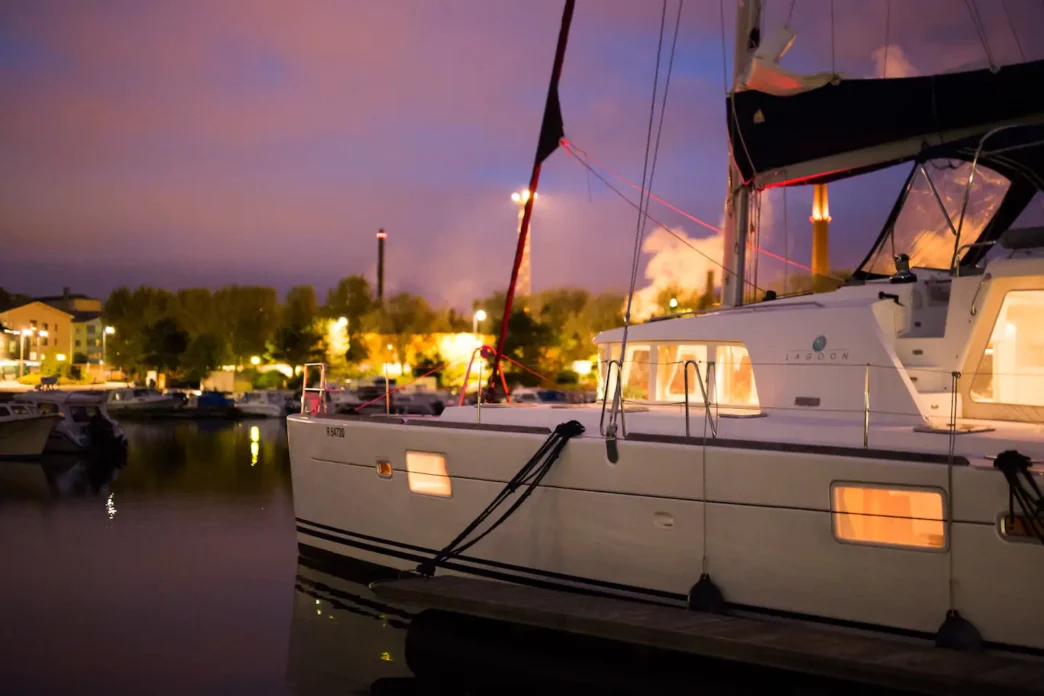
The ferry from Piraeus to Heraklion leaves at 9 pm and arrives at dawn. It crosses the Aegean overnight, and by midnight, the Greek mainland has disappeared entirely.
Out on the outer deck, the sea goes a specific, matte black. Not dramatic, just the darkness of open water absorbing everything.
The smell is diesel and salt and something faintly biological. A stranger 2 metres away lights a cigarette and offers one without speaking.
That crossing isn't something you can watch on YouTube and call it done. The internet, in its tireless way, keeps trying to close the gap.
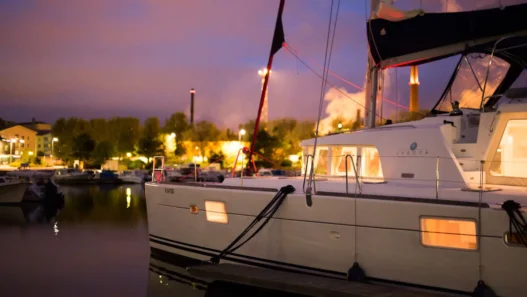
Cruise at night
What The Internet Does Well
Credit where it's due: the internet is extraordinary at information.
It can tell you the ferry timetable, the cabin upgrade cost, the best tavernas near the port in Heraklion, and whether the August water is warm enough to swim. It even manages, with some genuine ingenuity, to simulate the texture of certain experiences.
Whether you're taking a high-definition virtual tour of the Vatican, catching a live-streamed gig from a basement in Berlin, or playing live games at NetBet casino opposite a real dealer, the digital world captures the mechanics of an event brilliantly. You get the visual feed, the audio, and the immediate interaction.
But it's not the same as actually walking into a room in Monte Carlo, or a sticky-floored music venue, where everything (the carpet, the weight of the air, the specific calibration of people pretending not to watch each other) has its own gravity. The simulation is good. The original is something else entirely.
What The Algorithm Can't Index
The night market in Chiang Mai's old city smells like nothing else on earth. That's not hyperbole. It's a combination of grilled pork fat, marigolds, incense from a nearby temple, rain on hot pavement, and something sweet that nobody has ever satisfactorily identified.
You can't Google that smell. You can read about it on a dozen travel blogs, including well-written ones, and what you'll get is the information that there is a smell, that it's notable, that it's unforgettable.
None of that is untrue. None of it is the smell.
The internet transmits information. It doesn't transmit sensation. That distinction sounds obvious until you're actually standing in front of a som tam stall with your sinuses doing something they didn't know they could do.
You realise that the entirety of your research (the blog posts, the YouTube videos, the curated reels) prepared you completely for the logistics of being there and not at all for the experience of it.
This gap between knowing about a place and knowing a place is 1 of the more stubborn truths in travel. You can spend hours studying a destination, cross-referencing neighbourhoods, watching vlogs filmed on streets you're planning to walk.
All of that preparation is genuinely useful. It just isn't the same as the first moment the heat actually hits you, or the first time you realise the map in your head doesn't match the city in front of you.
The Specific Disorientation Of Arrival
There's a window on most long-haul journeys — usually somewhere between the airport and the first real street in a new city — where the sense of scale resets entirely.
Cities look different in photographs. Bigger, usually, because photographers find the most compressed angles, the most dramatic perspectives.
In person, Hanoi is chaotic in a way that takes 2 or 3 days to resolve into something navigable. The motorbikes aren't background noise. The heat isn't ambient. You're inside all of it, adjusting.
Hanoi Tet Old Quarter, Vietnam
This adjustment, which is uncomfortable and which is the entire point, can't be streamed or downloaded. Travel vlogs deliver arrival edited for watchability. The real thing has no editing. It has jet lag and wrong turns and the moment where you sit down somewhere and feel completely, temporarily, lost.
That feeling is the beginning of actually being somewhere. It's also the 1 thing no platform has figured out how to deliver.
There's also the matter of time. Travel's slow rhythms don't compress well. The 3-hour lunch that turns into 5. The afternoon you didn't plan for anything and ended up somewhere genuinely surprising.
The morning walk that started as practical, finding a pharmacy and finding breakfast, became the best part of the trip. None of this fits a reel. It only happens when you're physically present and have left enough slack in the itinerary for something unplanned to occur.
The Stranger On The Train To Ljubljana
- Visiting a friend in Ljubljana, Slovenia
On a night train through Slovenia, a retired schoolteacher might explain her theory of why Slovenian literature doesn't translate well into English. The conversation covers 2 small bottles of wine from the dining car, a lot of gestures, and perhaps 60% comprehension on either side.
That conversation exists nowhere. It was never recorded. It happened because 2 people were physically present in the same train carriage at the same time, and 1 of them felt like talking to a stranger.
The internet is extraordinary at connecting people who are already trying to find each other. It's not very good at the accidental kind of connection, the kind that requires bodily presence somewhere you didn't entirely plan to be.
There's a reason why travel writers keep returning to what some call “the third thing”: the experience that wasn't in the itinerary and turned out to be the whole trip. Nearly every version of that story involves physical presence, unexpected proximity, and zero wifi. Being there is the only way in.
Serendipity requires showing up. It requires being somewhere with enough openness to let something unplanned happen, and enough presence to recognise it when it does.
According to research from the University of California, experiences of awe and wonder, the kind travel is uniquely good at producing, have measurable psychological benefits, including increased feelings of connection and reduced self-focus. Those moments can't be engineered from a sofa.
What makes these accidental encounters so memorable is precisely that they weren't sought. There was no algorithm serving them up, no recommendation engine pointing the way. They happened because you were in a particular place, at a particular time, and open to whatever came next.
That combination, physical presence plus openness, is something no app has been able to replicate, and it's not obvious that any ever will.
Why We Still Scroll Anyway
It's worth asking why, if screens can't replicate the real thing, we spend so much time consuming travel content.
Part of it is practical. Research genuinely matters, and the information available now is extraordinary compared to even 15 years ago. Planning a trip is faster, cheaper, and less risky as a result. There's something else going on, too.
Travel content serves a function that isn't quite research and isn't quite experience. It's closer to longing. We watch videos of places we haven't been and feel something. Not the place itself, but the outline of a desire.
That hunger is actually useful. It's the thing that eventually makes you book the flight and pack a bag. The World Tourism Organisation has noted consistently that 1 of the primary drivers of travel is the human impulse to encounter the unfamiliar directly, not through mediation.
Travel content doesn't replace that impulse. It amplifies it.
What Simulation Is Actually Good For
Here's something worth sitting with: the people who travel most intentionally are often the ones who've spent real time with simulations. The player who's logged hundreds of hours at a virtual table and then sits down in a real cardroom knows the game cold.
What couldn't have been anticipated is the atmosphere, the other players' body language, the sound of the room, the weight of the whole thing. The simulation provided competence. The room provides context.
The same pattern holds for travel. People who've watched so many videos about Japan that they arrive in Tokyo already half in love with the place, and then they land, and the real thing arrives all at once, and the gap that's been held open for months finally closes. The simulation was so thorough, so detailed, so good at everything except being there.
There's a particular quality to the light in Lisbon in late afternoon. There's a specific, almost architectural silence in the backstreets of Kyoto at 6 am before the tourists arrive. You can read 10 accounts of either and still walk into them the first time feeling completely unprepared.
According to the National Geographic Society, transformative travel tends to hinge on exactly these moments of sensory surprise, the things you couldn't have anticipated from the content.
The internet will keep getting better at showing you places. Resolution improves. Immersive formats improve. All of it gets more sophisticated every year. It still won't be enough. Not because the technology is failing, but because the body is the point.
The gap is the thing. The gap is exactly why you go.