





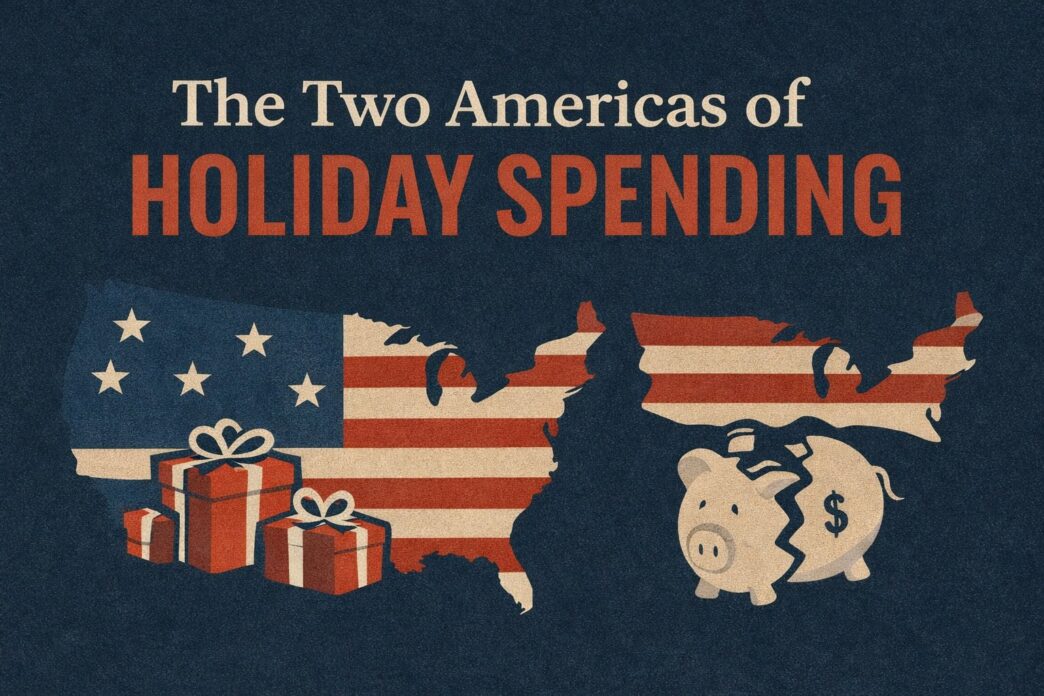
Americans say they plan to cut back this Christmas but the data tells a different story.
According to an NBC News poll, 55% of adults report they will spend less on gifts this year compared to last. Consumer sentiment fell to its lowest level in over three years in early November.
Yet nearly 203 million people shopped during the five days from Thanksgiving through Cyber Monday, the highest turnout in at least nine years.
Source: CNBC
A K-Shaped Christmas?
The phrase “K-shaped economy” captured attention during the pandemic to describe how white-collar workers thrived while service workers struggled. Since then, the pattern has only intensified. Moody's Analytics estimates that households in the top 10%, those earning over $250,000, now account for nearly half of all consumer spending, up from 36% in 1989.
The stock market explains much of this divergence. The S&P 500 has surged 86% over five years, hitting repeated record highs. But according to Federal Reserve data, the top 1% of wealth holders own nearly 50% of the stock market. The top 10% control 87.2%. The bottom half owns just 1.1%.
This creates what behavioral economist Peter Atwater calls a situation where those at the top experience asset inflation while those at the bottom face price inflation. Higher grocery bills hit everyone. Rising home values and stock portfolios benefit the few.
Christmas Trees Tell the Story
Even Christmas tree sales reveal this split. Tim Leyden, who owns a tree farm in Rhode Island, expected strong sales this year due to reduced competition. Instead, business dropped.
His premium trees, those 8 to 10 feet tall selling for $100, matched last year's performance. But the 6 to 8 foot trees at $75, which make up most of his inventory, sold poorly. Extras like wreaths and garlands languished.
An industry survey suggests Christmas tree sales are running just 3% above last year's levels, down from 7% growth in 2024.
Mac Harman, who sells artificial trees through Balsam Brands, sees the same pattern. High-end artificial trees costing thousands of dollars are selling well. Overall sales are down, with more shoppers choosing smaller trees than last year.
The artificial tree business faces another pressure: tariffs. Harman raised prices 10% or more after tariffs on goods from China and other Asian countries kicked in. His international sales in Canada, the UK, France, Germany, and Australia are strong. The US market struggles.
The Spending Paradox
Despite negative sentiment, retail sales have climbed nearly 4% year over year for most of 2025, according to Forbes. The National Retail Federation projects holiday sales will rise between 3.7% and 4.2%. TD Cowen goes further, forecasting 5% growth.
Several factors sustain this spending. Unemployment remains relatively low, though rising. Higher income households benefit from home value appreciation alongside stock gains. And holiday spending specifically carries emotional weight that insulates it from economic concerns to some degree.
The Deloitte Holiday Survey found shoppers plan to spend an average of $1,595, down 10% from 2024. But 77% expect higher prices on holiday items, and many are finding ways to maintain traditions despite strained budgets.
Income drives these choices. The NBC poll found that two-thirds of those earning under $50,000 plan to spend less, compared to 43% of those making over $100,000.
High-end retailers are thriving. Hermès posts strong returns. LVMH beat earnings estimates. Delta Air Lines reports that premium customers drive its growth. Luxury consumers increasingly favor experiences over goods. Top theatre tickets and sports events now easily cost thousands or tens of thousands of dollars.
Meanwhile, lower income consumers pull back. McDonald's notes that foot traffic among less affluent customers has dropped significantly. Even healthier fast-casual chains like Cava, Chipotle, and Sweetgreen report slower same-store sales growth.
The middle is shrinking too. Since last summer, households earning between $50,000 and $100,000 have shifted from tracking upper-income confidence levels to feeling more like lower earners, according to the Financial Times.
The Credit Card Warning
Credit markets show stress at the bottom. A Federal Reserve Bank of Boston report indicates high-end consumers are driving credit card growth while lower-income shoppers struggle but spend a higher percentage of income on cards to cover living costs.
The average US credit card score slipped to 715 in 2025, following another decline in January. Delinquencies on credit cards, auto loans and student loans have risen even as total balances hit records.
Auto loan delinquencies deserve particular attention. Working people know which bills can slide a month without serious consequences. Auto loans aren't among them. Rising delinquencies here historically signal deeper trouble ahead.
One trend spans income groups: the hunt for value. Seven in 10 shoppers are engaging in value-seeking behaviors, according to Deloitte. That includes shopping at more affordable retailers, redeeming loyalty points, and making handmade gifts instead of buying them.
Value retailers are benefiting. Walmart attracts new high-income shoppers. Off-price chains like TJX and Burlington see increased traffic across demographics. Even luxury shoppers are becoming more selective about where they spend.
CNBC reports that 82% of consumers planned to shop during Black Friday and Cyber Monday, drawn by promotions. Generation Z leads in deal-seeking, with 95% hunting for bargains.
This cohort also turns to AI for product discovery, with 43% using generative AI tools to find the best prices and summarize reviews.
This Christmas, sentiment and spending tell two different stories. Both are true. The economy grows while many feel left behind. Understanding this split matters for anyone trying to make sense of where we're headed.