





The first time I experienced an Amazonian retreat, I thought I knew what to expect – dense jungle, humidity that clings to your skin, and a stillness unlike anywhere else.
But nothing truly prepares you for how the Amazon feels.
What's fascinating is how the landscape of plant-medicine and transformational retreats has shifted in recent years.
While travellers once had to fly to Peru or Colombia, hop on riverboats, and trek deep into the rainforest to access authentic experiences, the world of experiential travel now looks very different.
Many of the same Peruvian and Colombian healers I met in South America are now bringing their expertise to Europe, Mexico, and even parts of Asia.
For modern travellers – road-trippers, or those planning year-end holidays — Europe offers a way to experience deep healing without the logistical challenges of a long-haul journey. Retreats across the continent combine authentic Amazonian teachings with the comfort, accessibility, and safety of European settings, making transformational travel both achievable and practical.
And for those who need to stay connected, using an international eSIM makes it easy to navigate cities, book transport, and remain reachable before fully diving into the retreat experience.
This guide walks you through what you really need to know — from European travel tips, choosing the right centre to safety, legality, cultural respect, and how to prepare for the experience
How We Got Here
The Western fascination with altered states of consciousness is not a new phenomenon. It has deep roots in the counterculture movements of the 1960s and 70s, even making its way into pop culture by the likes of the Beatles.
It was driven by a dissatisfaction of mainstream religious institutions and the hollow promises of post-war materialism. As counterculture began to pick up steam. The 60s were defined by the hippie movement, communal living, the sexual revolution, civil rights and women's liberation. Psychedelics was a tool to help people shatter their ego and see the value in these movements.
Fast forward to the 2010s and universities like Johns Hopkins, NYU and Imperial College London all began to increase their research on psilocybin and other substances. The number of peer-reviewed studies showing their therapeutic potential gathered momentum, and there was a renewed interest in these movements but with a scientific backing.
As a result, travellers who were looking for transformative experiences but wanted some scientific reassurance got the nod to jump into an Amazonian retreat and experience ayahuasca.
Why Europe Is Now Popular For Plant Medicine
Plant medicine tourism has evolved dramatically. Where people once travelled halfway across the world to Peru or Brazil for ayahuasca or San Pedro, many travellers are now choosing Europe instead. This shift isn't just about convenience – it's about safety, accessibility, and the emotional readiness required for such deep inner work.
Below, I break down the key reasons Europe is becoming one of the fastest-growing destinations for transformational retreats.
1. Easier Access Without Long-Haul Travel
One of the biggest reasons plant-medicine seekers are turning to Europe is simple: accessibility.
Instead of navigating multiple flights into the Amazon basin, travellers can now fly a few hours within the EU and land in Spain, Portugal, or the Netherlands — 3 major hubs where legal or decriminalised retreats are flourishing.
When I attended a retreat in Spain, I realised how much calmer I felt arriving without the jet lag, airport fatigue or the physical overstimulation that usually comes from long-haul trips. Starting the ceremony already regulated made a huge difference.
2. The Amazon Can Be Overwhelming for Nervous Systems
The jungle is beautiful — but intense.
Extreme humidity, insects, remoteness, and basic facilities can trigger anxiety or stress before the ceremony even begins. For travellers holding trauma or navigating mental-health struggles, this environment can sometimes work against them and contribute to difficult experiences.
Europe offers an alternative container: grounded, safe, and familiar. It allows people to focus on the inner journey instead of their surroundings.
3. Transformation Doesn't Require “Roughing It”
There is a growing global understanding that spiritual depth doesn't require discomfort.
The power comes from:
- the medicine
- the facilitator
- the integration support
- your emotional state when you enter the ceremony
The jungle itself isn't a prerequisite for healing. Many experienced Peruvian and Colombian shamans now run European retreats, bringing traditional lineage and teachings into gentle, supportive environments. The wisdom is the same — only the setting has changed.
4. Europe Offers Regulated, Safer Retreat Frameworks
Compared to the US and many parts of South America, Europe's wellness retreat industry is more regulated. This includes:
- trained facilitators
- on-site medical screening
- integration counselling
- structured safety protocols
- smaller, more therapeutic groups
For the modern traveller — especially first-timers — this level of transparency and professionalism makes the experience feel far more approachable.
5. Shorter Trips Fit Modern Traveller Lifestyles
Commuter rail, europe by train
Not everyone can disappear into the Amazon for 2 or 3 weeks.
Retreats in Europe often run 2–4 day programmes or weekend intensives, making them easier to integrate into everyday life. This flexibility has opened the doors to a wider audience, from professionals to solo travellers seeking personal growth.
6. Europe Still Offers Nature, Without The Extremes
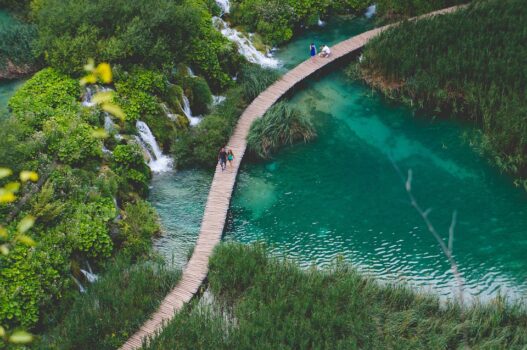
Plitvice lake in Croatia
Spain, Portugal, and the Canary Islands offer beautiful natural settings: forests, mountains, warm coastlines — all without the sensory overload of the Amazon jungle.
For many travellers (myself included), being in nature without being overwhelmed created the perfect balance for emotional openness during ceremony.
Safety And Sanctuary
Safety is a touchy subject for some when it comes to spiritual retreats. Many bury their head in the sand over the possibility of bad experiences. Even within a silent retreat, there can be risks involved, and it's super important to have guardrails and experienced teachers. Even if the threat is not from the substance or practice itself but other travellers, we need a controlled environment.
And it's here that Europe is exceptional.
The rapid growth of Ayahuasca tourism in South America has, unfortunately, led to more unpredictable retreats in some regions. Of course, this isn't to say the average experience is poor or high risk, it's just that protocols are different and more due diligence is required.
When seeking deep emotional work, safety can really enhance this. Sometimes it's not even the realities, but just the feeling of being safe, and it's reported that retreats in Europe do this very well.
Leading retreat centres like Avalon's Ayahuasca retreats in Europe have clinical standards that rival high-end wellness clinics. This means rigorous medical intake forms to screen for contraindications (such as heart conditions), the presence of medical professionals on-site, and clear emergency protocols.
Importantly, they do a lot of this behind the scenes – it doesn't feel like a clinical environment, but technically, it is one. For many, this is the best of both worlds. For some, the Amazon cannot be replaced, and that's also great. The important thing is choice.
Experiences In A Modern Travel Setting
One of the biggest questions travellers ask now is whether a plant-medicine retreat in Europe can ever feel as “real” or transformative as one deep in the Amazon.
After visiting retreats in both regions, I've learned that authenticity isn't tied to a maloka, a jungle hut, or how far you've flown. It's anchored in the people guiding the experience — their lineage, their training, and the way they hold the space.
Across Europe, especially in hotspots like Spain and Portugal, many retreats have found a way to merge traditional Amazonian wisdom with the comfort and accessibility of a modern travel destination. When looking for ayahuasca retreats near the UK, places like Avalon stand out because they don't dilute the cultural roots — they fly them in.
Avalon regularly hosts respected maestros who carry generations of knowledge:
- Taita Jairo Palchukán (Colombia, Kmetza tradition) — known for weaving music, ancestral teachings and sound healing into his ceremonies.
- Karaí Okenda Moreira (Brazil, Mbyá Guaraní people) — bringing a powerful ancestral lineage and distinct spiritual presence.
- Taita Isaías Muñoz Macanilla (Colombia, Uitoto ethnic group) — a traditional doctor whose approach feels deeply connected to Amazonian cosmology.
For travellers, this creates a fascinating blend — the cultural heart of the Amazon, yet the ceremony takes place in a peaceful Spanish countryside setting that feels familiar, safe and easy to reach. You get the depth of an indigenous teacher without needing 3 connecting flights and a riverboat ride.
The other major difference is the structure. European retreats tend to combine the shamans' spiritual guidance with Western medical support.
At Avalon, for example, a doctor is present during every ceremony, equipped for emergencies, and the entire operation follows the safety guidelines from the ICEERS Academy. The support staff-to-guest ratio can be close to 1:1, which is rare even in South America.
For modern travellers — especially those taking their first steps into plant medicine — this hybrid model offers the best of both worlds: cultural authenticity paired with the comfort, safety and accessibility that make transformation feel less intimidating and far more approachable.
Eco-Conscious Spirituality
In the conversation about global wellness, it's important to address the environmental impact of our spiritual pursuits. After all, those who are spiritually awake are often environmentally conscious. And while globalisation is often criticised for being bad for the environment, it's led to greener multiculturalism.
We must ask ourselves whether it's truly sustainable for thousands of Westerners to fly long-haul to the Amazon, putting immense pressure on fragile local ecosystems and contributing to carbon emissions. Such awakenings are becoming more mainstream, and everyone should be entitled to them. But if this happens, things destabilise.
By bringing a small number of gifted healers over to Europe, it's a much smaller carbon footprint. One shaman travelling to Barcelona to treat 20 people has a smaller carbon footprint than twenty people flying separately to Iquitos.
Why Integration Matters
When planning an ayahuasca journey, whether in Colombia, Peru, or Europe – there's 1 thing many travellers overlook: integration.
In the traditional Amazon retreat style, it's common to undergo a profound, life-shifting ceremony… and then fly home 2 days later. I've felt that jarring contrast myself — one moment in the jungle under a sky full of stars, the next surrounded by airport noise, emails, and obligations. For some travellers, that return to “real life” can be destabilising, and the insights from the ceremony fade quickly.
This is where Europe's retreat model has become influential — and why travellers researching Amazon retreats should pay attention.
High-quality centres place as much emphasis on integration as on the ceremony itself.
Because true transformation isn't just what happens while drinking the medicine — it's what happens after.
European centres such as Avalon have pioneered integration frameworks that include:
- Preparation calls before arrival
- Daily sharing circles to unpack emotions and experiences
- Holotropic breathwork sessions
- Art therapy and somatic practices
- One-on-one coaching
- Structured aftercare long after you fly home
Think of it as a bridge between the ceremony and the world you return to.
It helps you carry the insights back into your day-to-day life — whether that's back in London, Singapore or Sydney.
For travellers comparing options, this is one of the biggest practical differences between Amazon retreats and European centres:
- Jungle retreats offer raw, traditional immersion.
- European retreats offer structure, emotional safety, and guided integration — especially useful for first-time travellers.
Both have their place, but the right choice depends entirely on what kind of journey you're seeking.
Many travellers once looked to the Far East or South America as a way to “escape” — but true growth isn't about running away. It's about facing yourself and the challenges you carry.
A journey to the Amazon can be life-changing, but the reality of long flights, costly trips, and logistical hurdles often keeps it on the “someday” list. European retreats, by contrast, bring the same transformative experiences closer to home.
With accessible locations, shorter travel times, and familiar surroundings, more people can actually take that step and start their personal journey without the barrier of a distant adventure.
Whether you're combining it with your Europe trip or simply seeking a weekend reset, these retreats make deep healing more practical and achievable.