





🌟 While we no longer record the Q&A discussions during our Leadership Strategy Sessions, we continue to record the opening teaching. Enjoy a special preview of what we shared about the gap between vision and execution when your team knows where you're going but isn't delivering results. If you want to see the complete teaching and take part in upcoming sessions, consider upgrading to join us live next month.
February reveals what January concealed: vision alone doesn't guarantee execution. There's a gap between where you thought you'd be and where you actually are. Missed deadlines. Team members spinning their wheels. Work that should be moving isn't.
The instinct may be to add more people or to push harder. But execution gaps aren't solved by throwing resources at the problem or demanding more effort. They're solved by understanding which constraint is actually in your way.
Most execution problems come down to one of three readiness constraints:
Capacity: Too much planned for the resources actually available. Your team is stretched too thin, and adding more people won't help if you haven't identified the real problem first.
Competency: Wrong skills or knowledge for the work required. You have the people, but they don't have the training, experience, or expertise to do what needs doing.
Workways: Individual skills are strong, and people have the time, but the team can't come together. You have all-star players, but they aren't performing at the all-star level. That's a team habits problem.
Each requires a different solution. Misidentify the constraint, and you'll waste time, money, and team morale solving the wrong problem.
During this session, we explored:
-
How readiness shapes what you can reasonably expect your team to execute
-
Setting realistic expectations when your team tackles new or infrequent projects
-
Creating editorial standards that preserve individual voice while maintaining organizational quality
-
Establishing yourself as the leader when stepping into a new role or returning after an absence
-
Why outcome language works better than process directives with experienced teams
We mentioned during the call that it might be time for another Readiness Workshop, and we'll gauge interest from the community. If you'd like to be part of conversations like this and access workshops when we offer them, consider upgrading your subscription.
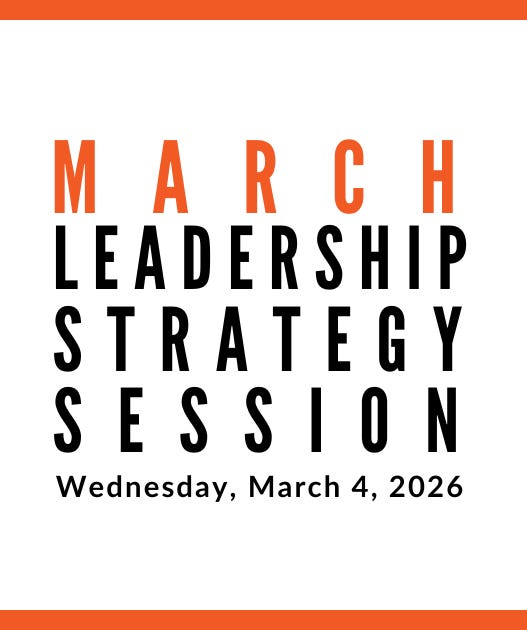
Our next Leadership Strategy Session will be on Wednesday, March 4, 2026, at 11:00 a.m. PST. (Details coming soon)
Premium subscribers can watch the full opening teaching and access all related resources shared during the call.👇🏽