



🌟 While we no longer record the Q&A discussions during our Leadership Strategy Sessions, we continue to record the opening teaching. Enjoy a special preview of what we shared about identifying the hidden friction slowing your team's work. If you want to see the complete teaching and take part in upcoming sessions, consider upgrading to join us live next month.
Last month, we looked at whether your team had what it needed to execute: the right competency, capacity, and workways to deliver. This month, we turned to a harder question: what's slowing your team down even when those things are in place?
In almost every team, there are patterns of waste hiding in plain sight. Work stalls because someone is waiting on a response. Projects get touched too many times before they ship. Outputs require rework because something wasn't clear upstream. These aren't signs of a bad team. No human system is 100% efficient, and chasing that is a fool's errand. The goal isn't to eliminate all waste. It's to reduce it, and you can only do that once you know where to look.
Using TIMWOOD, a framework from lean manufacturing adapted for knowledge work, we focused on the four patterns most likely to create drag in creative and knowledge-based teams: wait times, overproduction, overprocessing, and defects.
This month's Q&A also covered:
-
How to lead fairly when your team members work at genuinely different speeds
-
Making a clean exit from leadership roles without getting pulled back in
-
Breaking the delegation dilemma when doing it yourself feels faster
-
Redirecting a team member who has taken on work that isn't theirs to keep
-
What to do when administrative structures start overriding the people doing the actual work
These sessions often surface new frameworks and ideas before they make it into writing. This month that was epicycles: why the same mistake that kept astronomers wrong for more than 1,000 years might be showing up in your team right now. A post is coming, but the conversation happened here first. Consider joining us live as a paid subscriber.
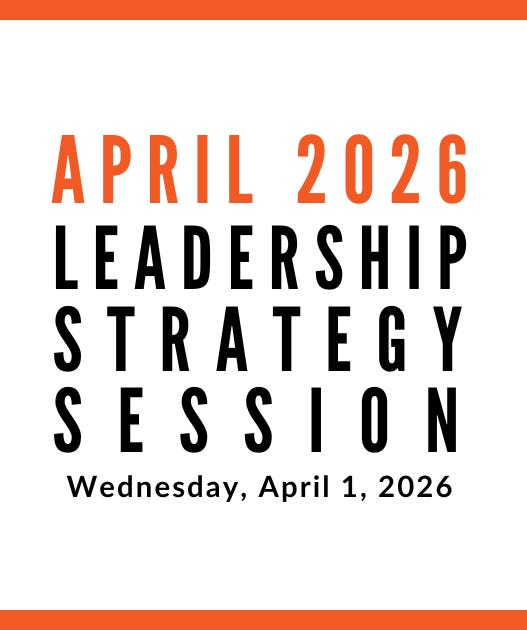
Our next Leadership Strategy Session will be on Wednesday, April 1, 2026, at 11:00 a.m. PDT. (Details coming soon.)
Premium subscribers can watch the full opening teaching, including the complete discussion of epicycles and what they mean for your team, and access all related resources shared during the call. 👇🏽