




I spent my first trip to Sapa staring at a wall of white.
Not the dramatic cloud-sea kind you see in photos — just thick, impenetrable fog that sat over the Muong Hoa Valley for 3 days straight.
I trekked from Y Linh Ho to Lao Chai on paths I could barely see, past rice terraces that were technically right there beside me and completely invisible. I knew they were beautiful. I just couldn't see them. And that's why it's important to factor in the best time to visit Sapa.
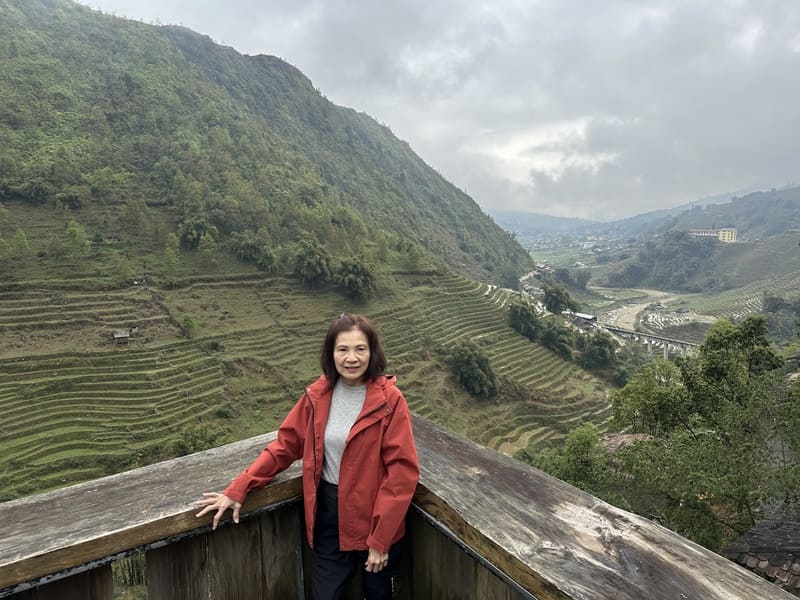
The Hoang Lien Son mountains were visible all the way to the ridgeline on my return trip. I stood at the same spot I'd stood before and finally understood what people meant when they said Sapa looks unreal.
The difference wasn't the hotel or the guide or how much I spent. It was the month I chose to go. On my latest trip, I visited Sapa in mid-March and properly allocated 4 days. Here's why I did that.
That's the thing about Sapa: timing doesn't just affect the experience, it decides what version of Sapa you actually get.
READ ALSO:
15 Unique Things To Do In Hanoi, Vietnam You Can't Miss
10 Best Beaches In Da Nang, Vietnam Worth Visiting
Best eSIM For Vietnam [2026 GUIDE]
Muong Hoa Valley in Sapa, Vietnam
What You Need To Know About Sapa Before You Pick Dates
Sapa sits at around 1,500 metres above sea level in the Hoang Lien Son mountains, and that altitude makes the weather genuinely unpredictable, even in the best months. The northern highlands' climate is among the most variable in the country, which is exactly what makes timing so critical.
You can wake up to dense fog and be walking in full sunshine by 10 am. Or you can start the day under a clear sky and watch it cloud over by early afternoon with zero warning.
In practice, this means 2 things.
First, don't schedule your most important activity — the big viewpoint, the long trek, the sunrise shot — for your very first morning. Give yourself a day to read how the weather is moving that particular week before you commit your one shot at it.
Second, build flexibility into your itinerary rather than booking every day back-to-back. If Day 2 fogs out, swap in a village market or a short walk near town, and save the Muong Hoa Valley trek for a day when conditions clear. Travellers who leave Sapa disappointed are usually the ones who had no room to shift plans when the weather didn't cooperate.
Here's the bigger point: a better hotel or a more expensive guide won't fix fog sitting over the valley, and it won't make the terraces turn gold 2 weeks ahead of schedule.
So before booking anything else, figure out what you're actually going for, whether that's the golden terraces, easy trekking, fewer crowds, or a specific festival, and pick your dates around that one thing.
Best Time To Visit Sapa, Vietnam By Season
March To May: Clear Skies, Easy Trekking
This is the safest window for first-time visitors, and the one I'd recommend if you just want things to go smoothly. The winter fog starts lifting, the air feels properly fresh, and temperatures climb steadily from around 10–18°C in March to 19–25°C by May.
Trails through Lao Chai and Ta Van are dry underfoot and comfortable to walk, without the mud or the heat that show up later in the year.
Lao Chai Village, Vietnam
The terraces won't be golden during this window. They're either freshly flooded (this happens late April, just before planting season) or just beginning to grow in. The flooded paddies have their own charm, though: in the early morning, they go completely still and mirror the sky and mountains above them, which is a different kind of beautiful from the harvest months.
March and April are my personal picks here. May starts to get busier with visitors and noticeably warmer and wetter toward the end of the month.
Mid-August To Mid-September: Golden Terraces
This is the version of Sapa you've probably seen in photos: layers of golden rice cascading down the hillsides into the valley below.
The rice ripens unevenly across the Muong Hoa Valley during this window, shifting from green to a deep, saturated gold in patches rather than all at once, which is actually what makes the landscape look so layered and alive.
Black H'mong farmers harvest by hand right along the trekking paths between Y Linh Ho, Lao Chai, and Ta Van during this period, so you're walking through an active harvest rather than just looking at scenery from a distance.
Y Linh Ho-Lao Chai-Ta Van village trek distance, Vietnam
Days sit around 18–24°C, nights drop to 13–16°C, and while some rain still passes through, it's lighter and shorter than the monsoon downpours you'd get in summer.
One practical note: book your accommodation 6–8 weeks ahead if you're aiming for this window. It's the most popular time to visit, and rooms in Lao Chai and Ta Van fill up before the ones in Sapa town do.
If you want the golden look to last into early October, Mu Cang Chai — about 3 hours from Sapa — peaks slightly later and is worth treating as a separate side trip.
June To August: If You're Flexible
This is monsoon season, and it should be treated as one. July alone averages around 264mm of rainfall spread across roughly 28 days, which means rain is less of a possibility and more of a near-daily event.
A clear morning trek can turn into a heavy downpour by noon with very little warning, and the descent from Y Linh Ho gets genuinely slippery once the clay-heavy soil gets wet.
Y Linh Ho village trek, Vietnam
That said, summer isn't without its appeal. The rice is actively growing, so the terraces turn an almost aggressive, saturated green that the drier seasons don't really produce. Waterfalls run at full volume, and tourist numbers drop noticeably, which changes the feel of the villages.
I'd only recommend this window if you're genuinely flexible, don't need guaranteed clear views for trekking or photography, and don't mind building rest days around the weather.
November: Good Weather, Fewer Crowds
November sits in a useful gap in the calendar. The harvest has wrapped up, the monsoon has cleared out, and most of the peak-season tourists have already left.
What's left is essentially spring-quality trekking conditions with a fraction of the people: dry trails, clear mountain views, and daytime temperatures around 12–18°C, dropping to 8–10°C at night.
The trade-off is that the terraces are bare after harvest, so skip this month if golden fields are the whole point of your trip. Instead, use the quiet to visit places that get overrun in peak season, like Ta Phin village — home to the Red Dao community and their traditional herbal bath ritual, a medicinal soak made from more than a dozen locally harvested plants.
Red Dao herbal bath in Sapa, Vietnam
In November, it's genuinely unhurried rather than something you're queuing for.
December To February: Solitude And Culture
Temperatures drop to 0–10°C, with occasional frost, and in rare years, a light snowfall on the higher slopes near Fansipan that draws domestic tourists up from Hanoi just to see it.
The terraces are bare and brown, and fog can be thick enough that you lose entire days to visibility.
What you get in exchange is a version of Sapa most visitors never see: empty trails, a town market that's genuinely working rather than performing for tourists, and the Gau Tao Festival — the largest H'mong festival of the year, typically falling in late January or early February.
Go into this window expecting atmosphere and mood rather than postcard views, and it tends to deliver exactly that.
Rainy weather in Sapa, Vietnam
So, When Is The Best Time To Visit Sapa, Vietnam?
If I had to pick just 1 window, it's early to mid-September.
It's the one time I've stood in the Muong Hoa Valley and had it look exactly like the photos — golden terraces, clear ridgelines, and farmers actually harvesting in the fields around me. After a first trip where fog erased the entire valley for 3 days straight, this was the trip that showed me what Sapa actually is.
If September doesn't work with your schedule, March or April is my backup. You won't get the gold, but you get reliably clear skies and easy trekking with way less planning risk, which makes it the better choice if this is your first time and you just want things to go smoothly.
Everything else, I'd treat as a deliberate trade-off rather than a default: November if crowds bother you more than missing the terraces, winter if you want solitude and don't mind the cold and fog, and summer only if your dates are genuinely fixed, and you have no other choice.
It's taken me a few trips and 2 completely different versions of Sapa to figure this out, and I still think about that golden September morning more than almost any other place I've been.
If there's one thing I'd want you to take from all this, it's that the month matters more than the hotel, the guide, or how much you spend. Get that right, and Sapa does the rest.