




$15,420   |   64 hrs worked   |   ~$241/hr
May 2026 Gross Income  ·  Total Hours  ·  Effective Hourly Rate
Let me set the scene for you.
May 2026: I'm in Lombok, Indonesia.
My mornings start with a surf or a padel session, I grab breakfast watching the ocean, and by 11 am I'm at my laptop. My work day ends with catching the sunsets. The afternoons? Friends, sunsets, more padel, the occasional two-hour nap with the fan on full blast.
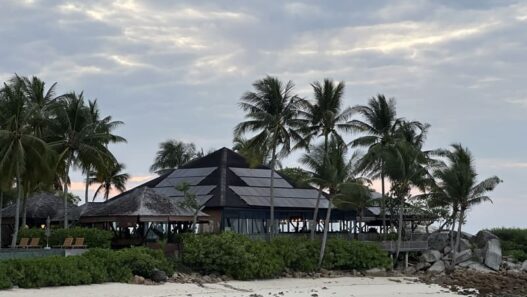
- Playing padel all day every day
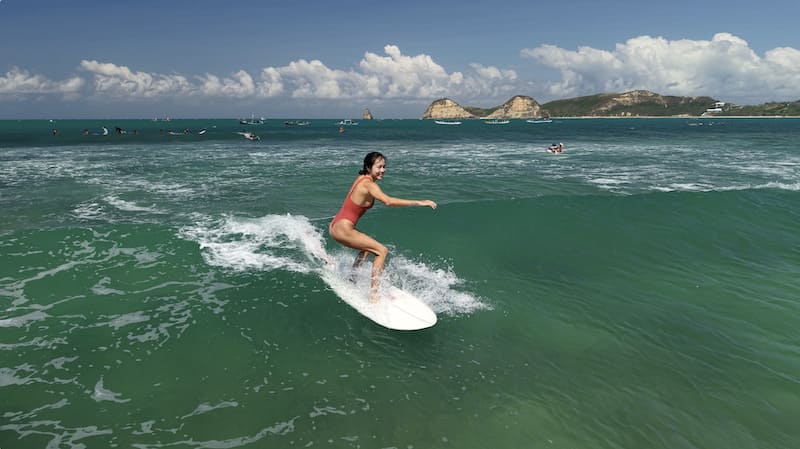
- Surfing in Lombok, Indonesia
And in between all of that, I earned $15,420 (~ S$20,000).
I'm not telling you this to show off. I'm telling you this because a few years ago, I would've scrolled past a post like this and thought, “yeah, right.”
So I want to be as transparent and honest as I can be — because this is real, it wasn't overnight, and if I could do it, there's genuinely no reason you can't figure out your own version of it.
READ ALSO:
The Secret Life of A Travel Blogger; How My Income Exploded 211% when I turned Full-Time
Digital Nomad Packing List; What I Pack For Full-Time Travel (2+ Years)
These Worldwide Digital Nomad Visas Lets You Live Anywhere!
What I Actually Do For A Living
Before we get to the numbers, here's a quick explainer — because “travel blogger” is one of the most misunderstood job titles on the planet.
I run Bel Around The World, a travel and lifestyle blog that's been going for 12 years now. Over time, it's evolved from a personal travel diary into an actual business with multiple income streams. Here's what that looks like in practice.
1. Display Advertising
I'm part of Mediavine, a premium ad network. Every time someone reads one of my blog posts and sees an ad, I earn a small amount. It adds up passively — I don't have to lift a finger once the posts are published. It's not going to make anyone a millionaire alone, but it's reliable and scales with traffic.
2. Brand Partnerships & Sponsored Content
Brands pay me to create content — blog posts, social media, guides — that authentically feature their products or destinations. I only work with brands I'd actually recommend. This is the biggest chunk of my income and requires the most active effort: pitching, negotiating, writing, delivering.
3. SEO Consulting
I work with clients who need help with their content strategy and SEO (if that's you, check out my services) — writing, publishing, building authority on search engines.
This is skills-for-hire: I built these skills by running my own website for years, and now other businesses pay for that expertise. It's also where some of my writing partnerships sit, since the two go hand in hand.
4. Affiliate Commissions
When I recommend a hotel, tour, or travel product and link to it, I earn a commission if someone books through my link. No extra cost to the reader — the commission comes from the brand side. Platforms like Booking.com, Agoda, Klook, and Get Your Guide all have affiliate programmes.
Sign up to get behind the scenes of running a remote content business!
My May 2026 Income Breakdown
It makes me nervous sharing this so transparently, especially how I've gotten into trouble with the customs and border peeps in the US, or gotten my valuables stolen by a “supposed friend” who then threatened to sue me. But I'm also in the spirit of showing you what's possible. And how I got to where I am today.
So at the risk of all the backlash I may get, here's the full breakdown. I've kept the income streams high-level — I don't share individual client details or partner names publicly, but the categories and totals are accurate.
And The Expenses?
This is the part income reports often leave out — so here it is. Running this business isn't free, but it's genuinely lean. My May expenses came to $1,177, which includes:
- Business subscriptions & software tools (email platform, project management, cloud storage, etc.)
- A small remote team — I work with a handful of contractors who help me with content, social media, and research
- Domain and hosting
That leaves a net profit of $14,243 — a profit margin of just over 92%. For a solo-run business, that's exceptional. It's one of the things I love most about this model.
$14,243
Net Profit · May 2026 · 92% Profit Margin
How Many Hours Did I Actually Work?
I know this is the part you're most curious about. So let me be completely straight with you.
Caught a rainbow while on a wave in Lombok!
I spent the whole of May in Lombok. It's hard to know what my working hours are, especially as I just jump on a whim whenever someone is missing a padel partner, or if the waves are looking exceptionally good, or if my neighbour wants to catch a sunset (Harris I'm looking at you).
For the sake of an average, let's say I worked an average of 4 hours a day, 4 days a week. That's 16 hours a week, or roughly 64 hours for the entire month.
| Mon | Tue | Wed | Thu | Fri | Sat | Sun |
|---|---|---|---|---|---|---|
| ✓ 4 hrs | ✓ 4 hrs | Off | ✓ 4 hrs | ✓ 4 hrs | Off | Off |
If you know me, you'd know by now that I'm not someone who works for money. I work for the freedom it gives me, for the joy I get to chase, for the brands I feel a connection with, for a cause I feel driven by.
~$241/hr
Effective hourly rate for May 2026
$15,420 ÷ 64 hours worked = $241 per hour. And I spent most of those hours overlooking the ocean.
Now — and I can't stress this enough — that rate didn't come out of nowhere. It's the compounded result of years of work that I didn't get paid well for. The hourly rate is high now because the foundations were built for a long time before the money caught up.
Think of it like a bamboo tree (Richard's favourite analogy). For years, it barely breaks the surface. Don't get me started on the pandemic dip (I poured my struggles from travel blogging here), and when Google and AI updates hit my traffic. Then one season, it shoots up metres in weeks. The growth was happening underground the whole time.
Pro tip: Don't compare your chapter 1 to someone else's chapter 8. The 64-hour months are possible — but they follow years of 200-hour months where I was building something nobody was paying me for yet.
What May Actually Looked Like
The whole month was spent in Lombok. If you haven't been — go. It's Bali's quieter, wilder, more soulful neighbour, and it gave me everything I needed.
I'd paddle out at 7 am, work from 11 to 4, then spend the afternoon playing padel or watching the sun melt into the sea with friends. That was basically my whole month.
My “office” changed daily. Sometimes it was in one of my favourite cafés in Kuta, Lombok. Sometimes it was a co-working space. Occasionally, it was a beanbag on a terrace with the Wi-Fi password scribbled on a napkin. The point is: I chose.
That's the real currency of this lifestyle — not the dollar amount, but the choice. The choice of where. The choice of when. The choice of how hard to push and when to let go.
READ ALSO:
What It's Like To Stay At Hotel Tugu Lombok, Indonesia
How to Become a Digital Nomad – The Starter Guide
Let's Bust Some Myths (Because I'm So Sick Of This)
Every time I share an income report, my inbox fills with the same comments. Let me address them head-on.
💬 "You can't make money blogging. That ship has sailed."
I just made $15,420 from content I've built on the internet. The ship hasn't sailed — the easy ship has sailed. The era where you could slap up thin content and rank on Google overnight? Yeah, that's gone. But building genuine expertise, a real audience, and a content business? That's more viable than ever, because most people gave up when it got hard.
- Cited by Google's AI Overview
- Recommended by AI engines
The bloggers who are thriving right now are the ones who treated it like a business from day 1. That means strategy, consistency, multiple income streams, and patience. It's not passive income at the start — it's very active income that becomes more passive over time.
💬 "Digital nomads just travel and take Instagram photos for free stuff."
There's absolutely a version of this that exists — and it's usually the broke one. I'm not on the “gifted trip” circuit. I pay for most of what I do, I have actual clients, I file taxes, I manage a remote team, and I negotiate contracts. This is a real business that happens to operate from beaches.
The “influencer who gets free stuff” model is real, but it's not the model I run, and it's rarely where the money actually is. Real money in this industry comes from creating genuine value — for readers, for brands, for clients — not from being a walking billboard.
💬 "Running your own business is too risky. What about stability?"
Here's a question: Is it actually more stable to have 1 employer who can make you redundant with one email? My income comes from multiple different streams. If 1 dips — and they do — the others hold. In May, affiliates were quieter than usual, but brand partnerships and SEO consulting more than made up for it.
That diversification is intentional. I spent years building different streams precisely because I didn't want to be dependent on one source. Yes, there's volatility — some months are leaner than others. But “stability” in a traditional job is often an illusion, and freedom has genuine financial value that rarely shows up in a salary comparison.
💬 "You must have had a huge following or a lot of money to start."
I started this blog with 0 audience, 0 industry contacts, and exactly the kind of budget you'd expect from someone who was figuring it out as she went. I didn't have a mentor, a trust fund, or a following. I had Wi-Fi, a laptop, and a stubborn refusal to quit.
The first income I earned from this blog was embarrassingly small. The point isn't where you start — it's whether you're still going 6 months, 2 years, 5 years later. Most people aren't. That's genuinely why the ones who are end up winning.
💬 "You probably just got lucky."
Luck is when preparation meets opportunity. I've had moments where things aligned well — a brand reaching out at the right time, a post gaining traction, a consulting client who became long-term. But those moments happened because I had already put in the years of work that made me findable and credible when the opportunity came.
There were plenty of months when I wondered why I was doing this. Months where income was low, motivation was lower, and a “normal job” looked genuinely appealing.
I didn't quit. That's less about luck and more about stubbornness.
Sign up to get behind the scenes of running a remote content business!
How I Built This — The Unglamorous Truth
I want to be honest here, because the “here's how I did it” section of income reports often glosses over the hard part.
It Took Years, Not Months
This business wasn't built in a season. I've been writing, publishing, testing, failing, adjusting, and publishing again for years. The early days involved writing posts that got 12 views and earning affiliate commissions that wouldn't cover a cup of coffee. I kept going anyway, because I understood that the content I was creating was an asset that would compound over time — like interest in a bank account, except the bank is Google.
I Treated It Like A Business From Early On
The shift from hobby blogger to business owner is mostly mental. It means tracking income and expenses properly. It means setting rates and sticking to them. It means understanding which activities earn money and prioritising those. It means hiring help when you can, even when it feels scary to spend money on something uncertain.
I Diversified Intentionally
I didn't have 5 income streams from day 1. I started with one (display advertising — the scrappiest, slowest-building one). Then I added affiliate revenue when traffic grew. Then I started pitching brands. Then, writing clients found me because of my published work. Then I started consulting because people asked for help with what I was already doing for myself. Each stream took time to develop, and each one built on the credibility of the ones before it.
I Invested In My Skills
SEO. Copywriting. Negotiation. Email outreach. Analytics. I didn't know most of these when I started. I learned them — through courses, through doing, through making mistakes. The consulting income I earn today is a direct return on the skills I invested in for years before anyone would pay me for them.
Check out my Skyrocket With SEO course here!
I Got Comfortable With Inconsistency
Some months are extraordinary. Some months are quiet. The lifestyle works because, across the year, the good months outweigh the slow ones — and because my expenses stay low enough that a quiet month is uncomfortable but never catastrophic.
Building a financial buffer and keeping overhead lean isn't glamorous advice, but it's the thing that actually made the whole lifestyle sustainable.
FAQ About Making Money Blogging
How long did it take before you earned meaningful income from your blog?
Honestly? A few years before it felt truly “meaningful.” I earned small amounts fairly early from affiliates and later from ads, but the income that changed my lifestyle came once I'd built enough authority and audience to attract brand partnerships and consulting clients.
There's no universal timeline — it depends on your niche, consistency, and how quickly you learn to monetise — but “overnight success” is never the reality.
You can book a call with me to discuss a personalised growth chart based on your goals/ objectives!
Do you need a huge following to earn from a blog?
No — and this is one of the most important things to understand. I earn the majority of my income from brand partnerships and writing commissions, not from follower counts. Brands care about audience quality and engagement, not just numbers. A highly engaged niche blog with 20,000 monthly readers can outperform a generic blog with 200,000. Focus on depth, not breadth.
Is the digital nomad lifestyle as good as it looks?
Yes and no. The freedom is real — the sunsets, the flexibility, the ability to base yourself wherever the Wi-Fi's decent — all of that is genuinely as good as advertised.
The isolation can be harder than expected. Building community on the road takes effort. And the admin side of running a business remotely — taxes, contracts, invoicing across currencies and time zones — isn't glamorous. It's worth it for me. Whether it's worth it for you depends on what you actually want.
What's the one thing you wish you'd done earlier?
Treated it like a business sooner. For too long, I wrote for the love of it without thinking strategically about income. The moment I started tracking what worked, pitching proactively, diversifying income, and investing in skills — that's when things shifted. Passion is essential, but passion plus strategy is what builds something sustainable.
My No BS Pitch Formula e-book details how to pitch and earn actual money from brands you love!
Surfing in Lombok, Indonesia
I wrote this post because I remember what it felt like to see income reports and wonder if they were real. I wanted you to see one that is — with the numbers, the context, the honest explanation of how it was built, and the acknowledgement that it didn't happen quickly or easily.
May 2026 was a genuinely good month. $15,420, 64 working hours, and a whole month in Lombok doing things I love. That's the life I built — slowly, imperfectly, stubbornly, over years.
You don't have to want this exact life. But if some version of it appeals to you — the freedom, the flexibility, the idea of building something that's yours — I hope this post shows you it's not a fantasy. It's a business model. And business models can be learned.
“The best time to start was 5 years ago. The second best time is today.”
If you've got questions — about blogging, about income streams, about how any of this actually works in practice — drop them in the comments. I read every single one.
— Bel x
READ ALSO:
How To Start A Professional-Looking Blog In No Time!
The Uncensored Truth Behind How I Afford To Travel So Much
Best Cities For Digital Nomads To Work In