






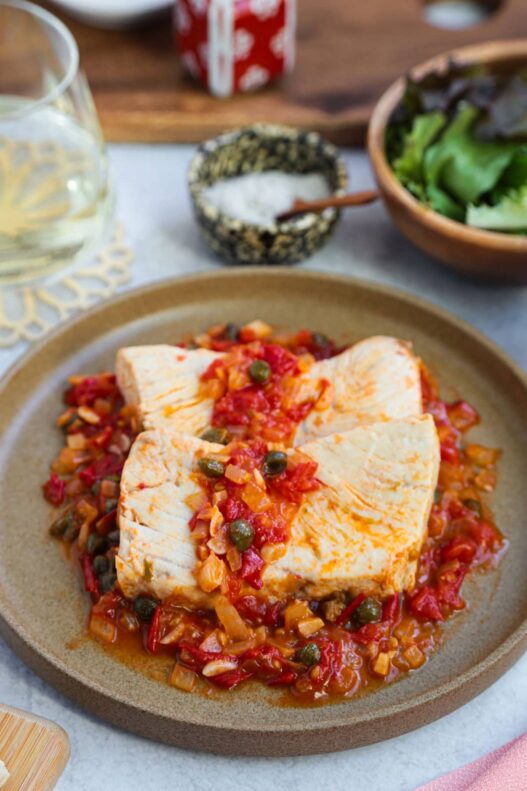
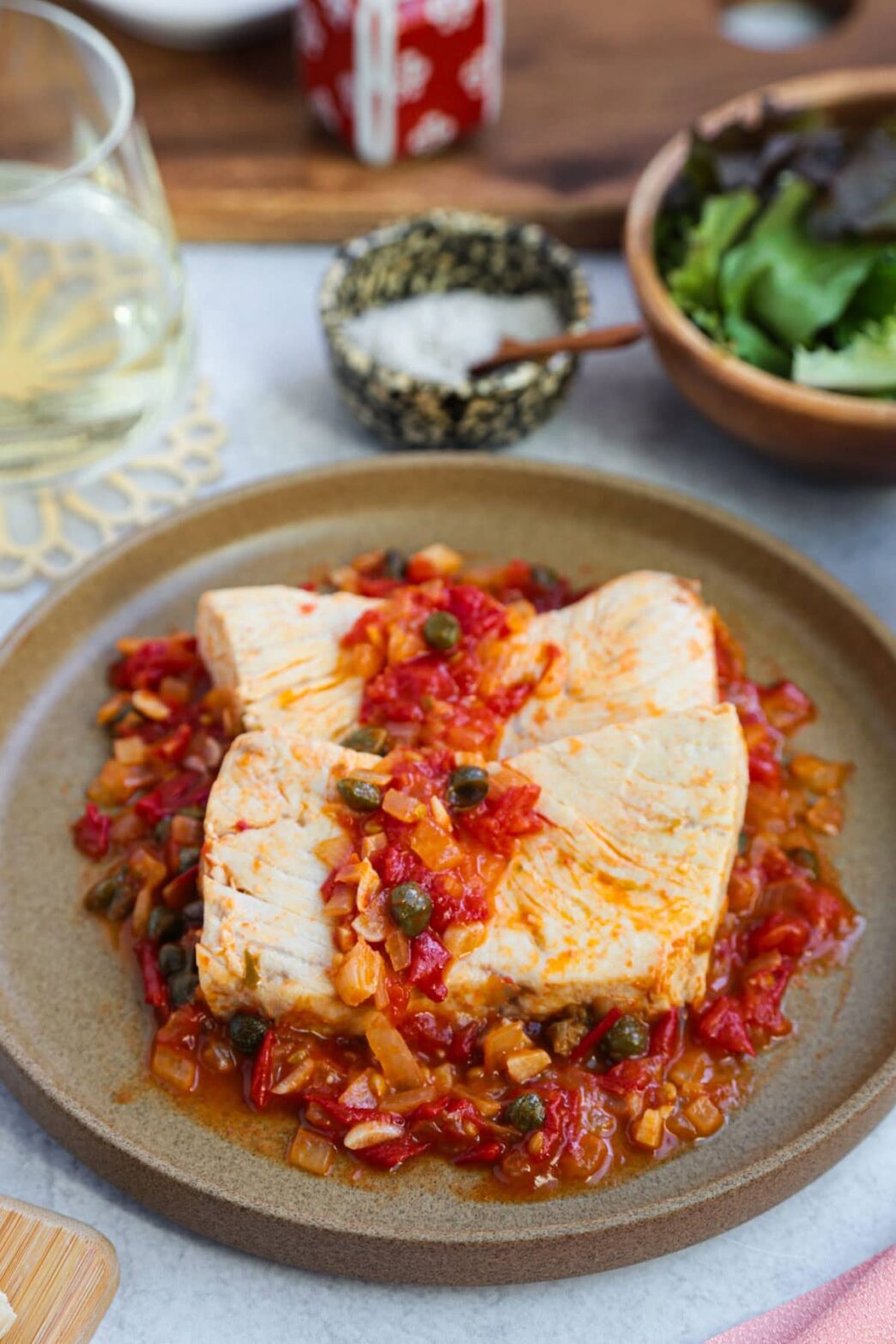
This easy fish Provençale is full of Mediterranean flavors and only takes about 20 minutes to make. It's a simple dish that can be served as part of a weeknight dinner, or as a rustic meal with a fresh baguette, a salad, and a chilled glass of wine.
I love recipes that look and taste a little fancy but require very little effort — and this fish Provençale is exactly that. The sauce is made in the same skillet as the fish, using just a handful of ingredients: tomatoes, garlic, white wine, onions, and capers. As the fish cooks, the wine reduces, the tomato sweetens, and the capers add a salty, briny finish.
It's delicate, fresh, and perfect when you want something satisfying but not heavy. I would place this dish in the same category as this tuna steak with tomato relish or salmon en papillote.
Why I Love This Recipe
The white wine and capers give the dish an elevated, restaurant-style taste, while the fruity tomato keeps it light and summery.
It's also very flexible. You can use halibut, cod, snapper, or another firm white fish, and the whole dish comes together in one skillet with minimal prep.
What Is Fish Provençale?
Fish Provençale is a simple Mediterranean-style fish dish inspired by the flavors of Provence, in the south of France. The exact ingredients can vary, but Provençale-style dishes often include tomatoes, garlic, olive oil, herbs, wine, olives, or capers.
This version is intentionally kept simple to speed up the cooking time. The fish is gently cooked in a mixture of white wine, onion and tomato, until the liquid reduces into a light and fruity sauce.
Ingredients
- Olive oil: Olive oil adds an element of fruitiness and is used to fry the onion and garlic.
- Yellow onion or shallot: Both work well. Yellow onion has a sharper and sweeter taste while a shallot is milder and more delicate overall.
- Garlic: One minced garlic clove is enough to perfume the sauce without overpowering the fish.
- Firm white fish: Halibut, cod, snapper, sea bass, or haddock are all good options. Choose fillets that are about 6 to 8 ounces each.
- Tomato: One large tomato, chopped, adds sweetness, fruitiness, acidity, and gives the sauce a chunky texture.
- White wine: Sauvignon Blanc, Pinot Grigio, or any other crisp white wine that you like to drink. Avoid dessert wines as they are too sweet and can make the sauce taste unbalanced.
- Capers: Capers add a salty, briny pop that gives the sauce its Mediterranean flair.
- Salt and pepper: To balance the flavors, if needed.
How To Make Fish Provençale
For the full ingredient measurements and step-by-step instructions, scroll down to the recipe card.
- Start by softening the onion or shallot in a little olive oil. Add the garlic, fish, chopped tomato, and white wine, then cover the skillet with a lid and let everything gently simmer until the fish is almost cooked through.
- Finish the dish with capers and let the sauce reduce for a few more minutes, until the fish is tender and flaky. Spoon the tomatoes and capers over the fish, season to taste, and serve warm.
Variations
- For a more classic Provençale flavor, add a few chopped olives with the capers.
- For a little heat, add a pinch of red pepper flakes with the garlic.
- For an herby finish, sprinkle the dish with freshly chopped parsley or basil right before serving.
- For a richer sauce, add a small pat of butter at the end and gently swirl it into the pan sauce.
Recipe Cooking Tips
- Use a firm white fish so the fillets hold their shape while simmering. Delicate fish tends to fall apart when cooked for a longer time.
- Keep the heat gentle once the wine comes to a boil. Fish cooks quickly, and a lower simmer helps keep it tender and flaky.
- Wait until the end to season with salt. Since capers are already quite salty, wait until the cooking is done before seasoning the sauce.
- Use a skillet with a lid. Covering the pan helps the fish cook evenly and stay moist.
What To Serve With Fish Provençale
This dish is light and saucy, so it pairs well with simple sides that can soak up all the bright flavors of the sauce.
Serve it with crusty bread, roasted potatoes, couscous, or a bowl of Japanese rice. It's also lovely with a simple green salad, a refreshing Japanese cabbage salad, sautéed green beans, or roasted asparagus.
And lastly, pair it with a chilled glass of sparkling white or rose for the perfect summer meal.
Storing Leftovers
Fish is best served fresh, but leftovers can be stored in an airtight container in the fridge for up to 2 days.
Reheat gently in a skillet over low heat, covered, for a few minutes. You can also microwave it briefly on low or medium, but be careful not to overheat the fish or it may become dry.
Did you like this recipe? Are there changes you made that you would like to share? Share your tips and recommendations in the comments section below!
Print
Fish Provençal
This easy Fish Provençale is made with flaky white fish, fresh tomato, garlic, white wine, and capers. It's light, bright, and ready in about 20 minutes — perfect for a simple summer dinner.
- Prep Time: 10 minutes
- Cook Time: 12 minutes
- Total Time: 22 minutes
- Yield: 2 servings 1x
- Category: Fish and seafood
- Method: Skillet
- Cuisine: French
- Diet: Low Calorie
- Fry the onions. In a medium to large skillet over medium heat, add the oil. When the oil is hot, swirl it around to evenly coat the skillet. Add the onions and cook for 2 minutes, until the onions are soft.
- Cook the fish. Add the garlic, fish, chopped tomatoes, and white wine. Bring the wine to a boil and lower the heat. Cover with a lid and cook for 5 minutes. Take the lid off and add the capers. Stir and cook uncovered for 3-4 minutes, until the liquid has evaporated and the fish is fully cooked.
- Serve. Plate the fish and top with the sauce. Season with salt and pepper and serve immediately.
Nutrition
- Serving Size: 1 serving
- Calories: 327
- Sugar: 1.2g
- Sodium: 257mg
- Fat: 10g
- Saturated Fat: 1.7g
- Unsaturated Fat: 1.4g
- Trans Fat: 0g
- Carbohydrates: 4.3g
- Fiber: 0.7g
- Protein: 42.6g
- Cholesterol: 111mg
Frequently Asked Questions
Firm white fish works best. Halibut, cod, snapper, sea bass, and haddock are all good options. Try to use fillets that are similar in thickness so they cook evenly.
Yes. You can replace the white wine with chicken broth, vegetable broth, or seafood stock. The flavor won't be as fresh and bright so I recommend squeezing a little fresh lemon juice at the end.
Yes you can but for the best and freshest sauce, stick to fresh tomatoes. If using canned tomatoes, use a small amount of diced tomatoes and drain some of the liquid first so the sauce doesn't become too watery.
The fish is ready when it flakes easily with a fork and is opaque in the center. The exact cooking time will depend on the thickness of the fillets.
No, this version is not spicy. If you like a little heat, adding a pinch of red pepper flakes should do it.
I don't recommend freezing this dish because the texture of the fish and sauce will deteriorate.